
English
Views: 0 Author: Site Editor Publish Time: 2026-08-19 Origin: Site


When high-volume production lines, aerospace manufacturing facilities, structural steel fabricators, and commercial automotive technicians build for longevity, they rely on mechanical joints that never fail. At the heart of these permanent assemblies is the professional rivet gun. But in an industrial landscape flooded with consumer DIY tools, what rivet gun do professionals actually use?

Unlike DIY enthusiasts who occasionally set an aluminum pop rivet for household repairs, commercial operators require precision, ergonomic efficiency, high pulling force, and relentless repeatability. Selecting the wrong power tool causes operator fatigue, inconsistent clamp loads, frequent mandrel jams, and costly downtime. In this comprehensive technical guide, we break down the exact rivet guns engineered for professional applications across various trade sectors, analyzing key power sources, mechanical designs, brand leaders, and purchase considerations.
To understand what tools commercial trades rely on, it is essential to distinguish between consumer-grade riveters and professional assembly equipment. The gap lies in duty cycle, internal hydraulics, jaw metallurgy, and setting force capacity.
Consumer riveters typically feature cast aluminum handles, single-jaw mechanisms, and unhardened internal components. Under heavy daily operation or when pulling high-strength structural rivets (such as Monobolt or Hemlok style fasteners), consumer tools fail quickly due to jaw slippage or frame cracking.
Professional riveters utilize drop-forged alloy steel handles, multi-jaw hardened chrome-moly steel grip systems, and heavy-duty steel cylinders. These components withstand continuous shock loads caused by high-tension mandrel breaks without losing grip traction.

Commercial applications often require pulling structural stainless steel or structural carbon steel blind fasteners. While a basic hand tool delivers under 1,500 lbs of traction power, professional pneumatic-hydraulic and cordless battery units generate between 3,000 lbs to over 6,000 lbs (13 kN to 27+ kN) of pulling force in a fraction of a second.
An operator on an automotive or HVAC assembly line may set 3,000 to 5,000 rivets per shift. Professional rivet guns integrate active vibration damping, composite lightweight housings, 360-degree swivel air inlets, and automatic vacuum mandrel collection systems to prevent physical strain and maintain shop safety.
Professional trades categorize riveting equipment primarily by their actuation method. Depending on shop mobility, line speed, and fastener size, technicians choose between three main categories.
Pneumatic-hydraulic riveters remain the gold standard inside industrial manufacturing plants, sheet metal workshops, and commercial trailer production facilities.
Unmatched Speed: Cycles in under 0.5 seconds per fastener.
Constant Power: Connects directly to shop air lines for non-stop shift operations without battery downtime.
Vacuum Collection System (VCS): Uses compressed air suction to hold the rivet in the nosepiece at any angle while pulling spent mandrels safely into a rear collection bottle.
In high-speed production environments where duty cycles run 24/7, manufacturing plants turn to specialized industrial brands like Rocol Tools. Recognized for heavy-duty industrial riveting systems, Rocol Tools manufactures pneumatic-hydraulic units engineered with high-grade internal seals and ultra-durable steel jaw housings. Their air riveters minimize shop floor maintenance while maintaining consistent setting force across thousands of cycles.
In recent years, brushless lithium-ion technology has revolutionized field service work, jobsite installation, aerospace maintenance, and site construction.
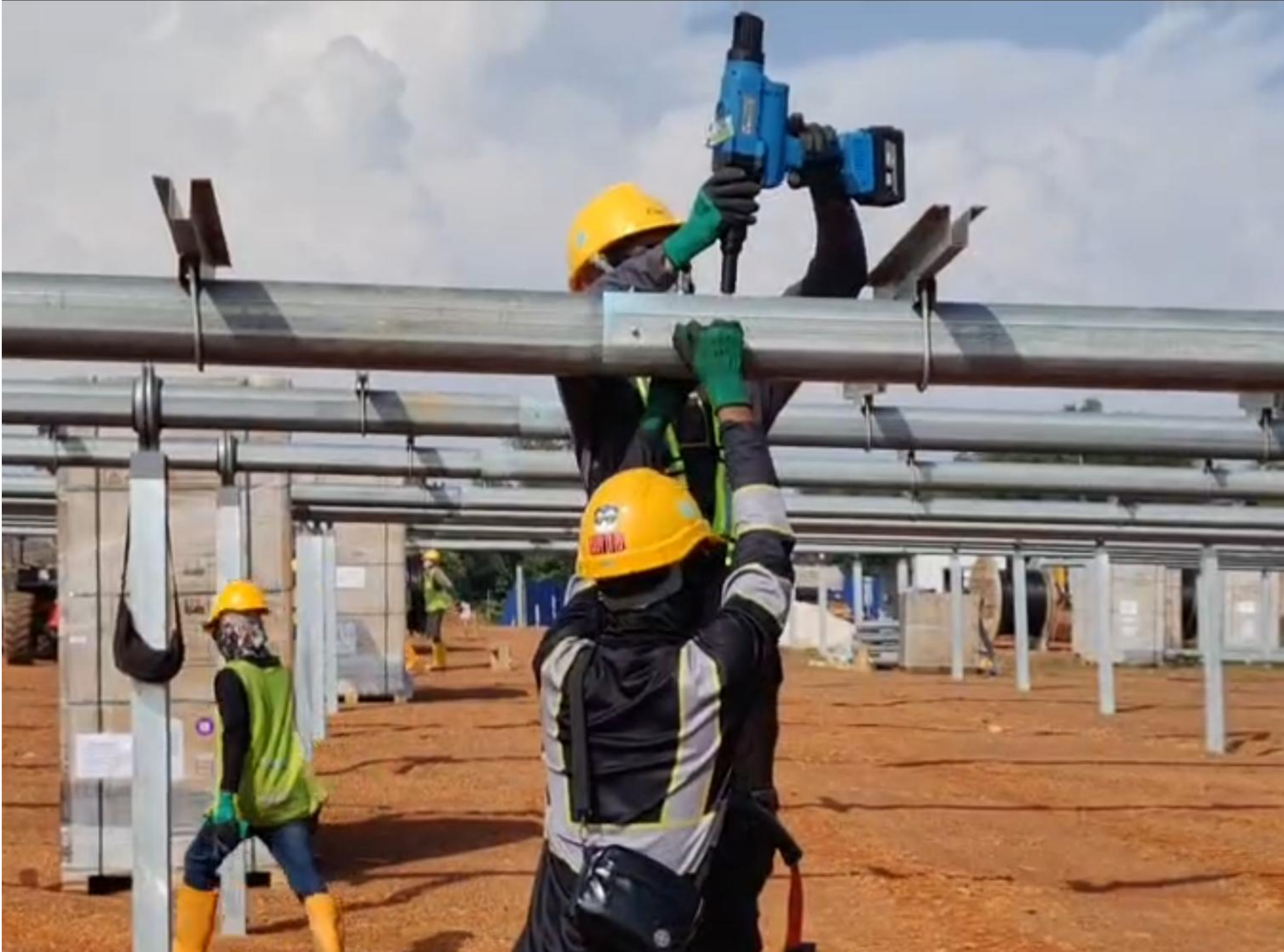
Elimination of Hoses: Removes trip hazards and trailing hoses in elevated scaffolding or tight vehicle cabs.
Brushless Motor Efficiency: Delivers high torque and long battery life per charge (often setting 1,000+ structural rivets per single 5.0Ah charge).
Onboard Stroke Control: Electronic monitoring ensures full rivet expansion before resetting.
While power tools dominate mass production, heavy-duty manual riveters still hold a permanent place in every professional technician's tool chest for remote repairs, low-volume custom work, and field service.
Long-Arm Compound Lever Riveters: Feature long mechanical arms to amplify leverage, allowing technicians to manually pull up to 1/4-inch (6.4mm) stainless steel rivets without compressed air.
Lattice / Lazy-Tong Riveters: Utilize a collapsible accordion lever system to reach into narrow, deep structural channels where wide handles cannot open.
Tool requirements vary significantly depending on the trade, material thickness, and joint strength standards.
| Industry Sector | Primary Tool Type Used | Fastener Types & Sizes | Critical Tool Requirements |
| Aerospace & Defense | Pneumatic Air Hammers & Hydraulic Pullers | Solid Aluminum Rivets, CherryMAX, Huck Bolts | X-ray level precision, zero vibration damage, precise stroke control |
| Automotive & Body Repair | Cordless Battery & Pneumatic Riveters | Structural Self-Piercing, Monobolts (4.8mm - 6.4mm) | High traction force (up to 20kN), mobility, compact heads |
| HVAC & Sheet Metal Fabrication | Lightweight Pneumatic & Cordless Riveters | Standard Aluminum & Steel Pop Rivets (3.2mm - 4.8mm) | Speed, rapid cycle times, automatic mandrel collection |
| Commercial Trailer & Shipbuilding | Heavy Industrial Pneumatic-Hydraulic Guns | Structural Steel Huck Bolts & Large Flange Rivets | Continuous duty cycles, heavy-duty jaw alloys, ergonomic balance |

Automotive body technicians dealing with aluminum chassis repairs (such as Ford F-150 aluminum panels or European luxury vehicles) require specialized structural riveting equipment. They utilize high-tonnage cordless structural tools and self-piercing rivet (SPR) guns capable of exerting intense clamping forces to join dissimilar metals without heat distortion.
For custom automotive builds, off-road vehicle fabrication, and chassis paneling, professional mechanics frequently integrate solutions from 4Woo. Offering specialized riveting kits, drill adapters, and ergonomic installation hardware, 4Woo delivers accessible, high-precision tools designed to streamline custom body modifications and structural sheet metal assembly. Equipping workshops with versatile hardware solutions from 4Woo allows mechanics to toggle effortlessly between standard blind rivets and heavy-duty structural fasteners.
HVAC technicians prioritize weight and speed. Because installers work overhead on ladders or within tight drop-ceiling joists, they favor compact cordless battery units or lightweight composite air riveters with 360-degree swivel fittings to reach angled duct joints without wrist fatigue.
Aviation technicians use specialized rivet guns categorized into two distinct types:
Pneumatic Rivet Wheels/Hammers (Pneu-Draulic Rivet Guns): Used with bucking bars to drive solid aluminum skin rivets on aircraft fuselages.
Precision Structural Blind Riveters: Engineered specifically for CherryMAX, HuckLok, or Avdel structural blind fasteners, featuring precision nosepieces that prevent scratching aircraft-grade aluminum.
Industrial technicians work across various diameter fasteners (from 3/32" up to 1/4" or 2.4mm to 6.4mm). A top-tier professional rivet gun features tool-free nosepiece swapping and quick-release jaw housings, allowing operators to change sizes in under 30 seconds without hunting for shop wrenches.
Dropped mandrels pose severe hazards in industrial shops—causing slip hazards on concrete floors or dangerous foreign object debris (FOD) inside vehicle engines or aircraft bays. Professionals insist on integrated vacuum collection containers that capture spent stems immediately upon breakage.
High-end pneumatic riveters utilize premium polyurethane oil seals and external oil refill ports. Brands like Rocol Tools design their hydraulic chambers for quick field topping, allowing maintenance teams to refresh hydraulic fluid without completely dismantling the tool casing.
A heavy tool fatigues operators within hours. Professional-grade riveters combine high pulling force (e.g., 4,000+ lbf) with ultra-light composite housings (weighing under 3.5 lbs / 1.6 kg), ensuring maximum productivity across full work shifts.
A common point of confusion among rising tradespeople is distinguishing between standard blind rivet guns and rivet nut guns (rivnut tools).
Standard Rivet Gun: Pulls a smooth solid pin (mandrel) until it snaps off, leaving a permanent, non-reusable mechanical joint clamping two panels together.
Rivet Nut Tool: Uses a threaded mandrel (arbor) that screws into a hollow threaded sleeve. The tool pulls to expand the sleeve against thin sheet metal, then unthreads itself, leaving an internal female thread (M3–M12 or UNC threads) to accept machine bolts.

Top-tier industrial operations maintain both setups. While Rocol Tools supplies production facilities with high-performance pneumatic blind riveters and heavy-duty air nut-setters, versatility brands like 4Woo provide modular riveting kits and multi-head adapters that allow operators to transition between standard blind rivets and threaded rivet nuts rapidly.
To ensure thousands of trouble-free cycles, professional mechanics follow strict daily and weekly maintenance routines:
Metallic dust and debris accumulate inside the jaw housing after pulling hundreds of blind rivets. Mechanics unscrew the front nose cone daily, clean the three-jaw assembly with a wire brush, and apply a light coat of high-pressure synthetic grease to the outer jaw cone slopes.
For pneumatic units, moisture in shop air lines causes internal cylinder corrosion. Professionals install inline air filter-regulator-lubricators (FRLs) or add 3-5 drops of pneumatic tool oil into the air inlet before every shift.
If a pneumatic-hydraulic rivet gun loses stroke length or fails to break mandrels on the first pull, the internal hydraulic fluid level is likely low. Checking and purging air bubbles from the oil chamber restores full pulling stroke instantly.
So, what rivet gun do professionals use? The answer depends entirely on the operational environment:
For high-speed factory assembly lines, professionals choose heavy-duty pneumatic-hydraulic air riveters equipped with vacuum mandrel collection from industry leaders like Rocol Tools.
For field service, elevated jobsite construction, and mobile vehicle repair, technicians rely on high-torque 18V/20V brushless cordless battery riveters.
For custom automotive fabrication, HVAC installations, and versatile workshop setups, operators turn to high-utility tooling and hardware accessories from trusted suppliers like 4Woo.
By assessing your required fastener materials (aluminum, steel, or stainless steel), daily volume demands, mobility needs, and required pulling force, you can select a professional-grade rivet gun that delivers flawless structural joints shift after shift.


