
English
Views: 0 Author: Site Editor Publish Time: 2026-08-07 Origin: Site


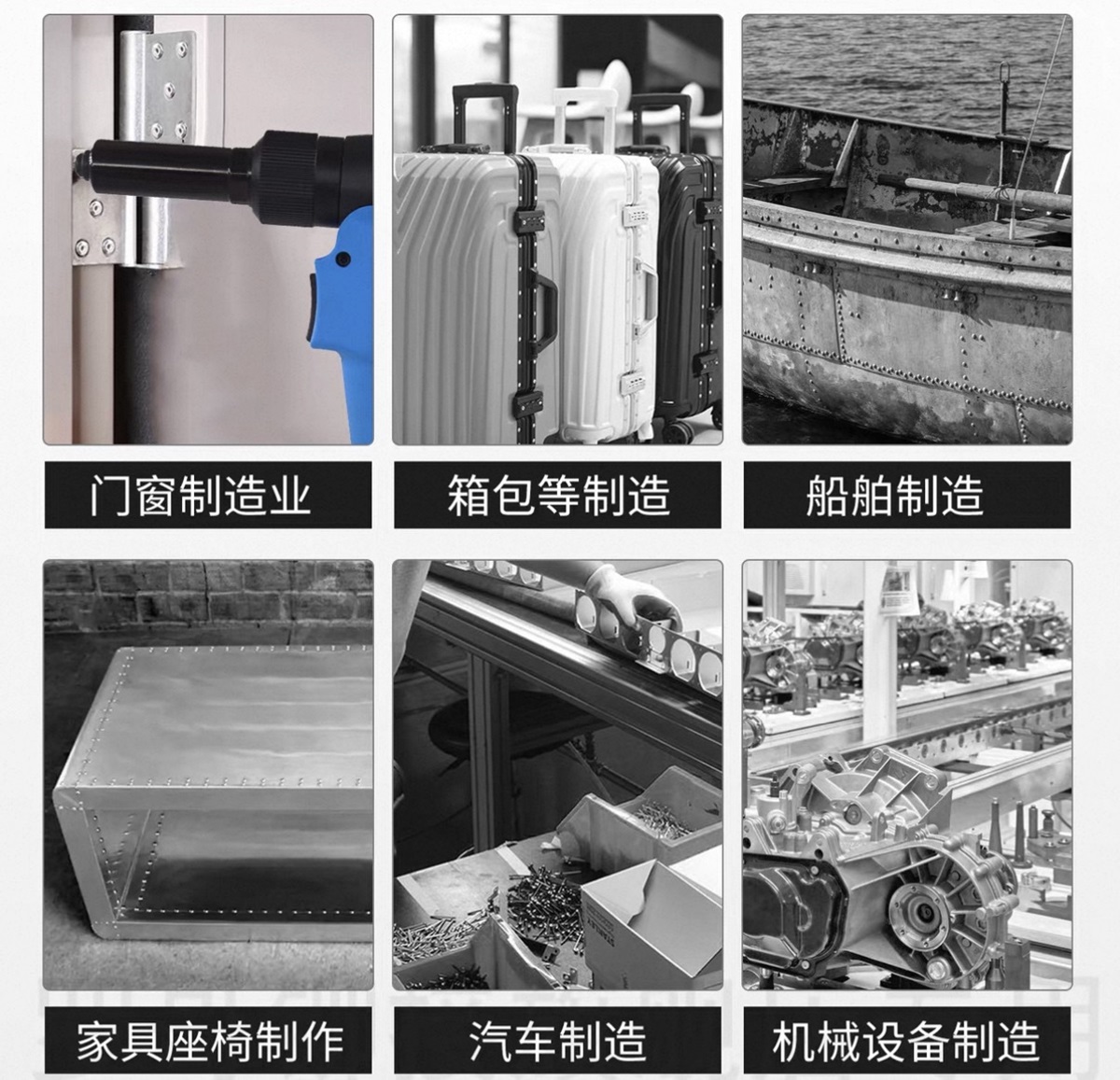
In the worlds of sheet metal fabrication, automotive manufacturing, aerospace engineering, and structural construction, joining materials securely and efficiently is a fundamental requirement. While welding, bolting, and adhesive bonding each have their place, blind riveting remains one of the most reliable, cost-effective, and high-speed mechanical fastening methods available.
At the heart of this process is a specialized tool: the rivet gun (also known as a riveter or rivet puller).
Whether you are a manufacturing technician, workshop manager, or industrial engineer, understanding how a rivet gun works—and selecting the right tooling ecosystem—is essential for achieving zero-defect joints and maximizing shop floor throughput.
In this comprehensive industrial guide, we will break down the mechanics of blind rivets, explain the step-by-step operation of different rivet gun power sources, analyze mechanical engineering principles, and highlight benchmark equipment standards from industry leaders Rocol Tools and 4Woo.
A rivet gun is a mechanical, pneumatic, hydraulic, or battery-powered tool designed to install blind rivets (commonly called "pop" rivets) or structural fasteners into aligned material holes.
Unlike traditional solid rivets—which require access to both sides of a workpiece to hammer or buck the fastener—a modern rivet gun installs fasteners entirely from one side of the assembly. This "blind" access capability makes rivet guns indispensable in modern manufacturing.

To understand how the tool functions, it helps to first look at the fastener itself. A standard blind rivet consists of two main parts:
The Body (Sleeve/Hatter): A hollow cylindrical tube with a formed head at one end.
The Mandrel (Stem): A solid pin running through the center of the body, featuring a widened head on the blind side and a engineered break-point notch.
The operating principle of a rivet gun relies on axial tensile pull force. The tool grips the protruding mandrel stem and pulls it backward into the rivet body, expanding the sleeve against the back wall of the material before snapping the mandrel cleanly at its break-notch.
Here is the precise sequence of events during a single trigger activation:
The operator inserts the long mandrel stem of the blind rivet into the nosepiece of the rivet gun. The assembled rivet body is then pushed through pre-drilled holes in the workpieces to be joined.
When the trigger is pulled, an internal clamping assembly—consisting of two or three hardened tungsten-carbide jaws inside a tapered pusher sleeve—moves backward. As the tapered housing tightens around the jaws, they bite down firmly on the mandrel stem.
As the internal piston or gear mechanism pulls the jaws further back, the widened head of the mandrel is drawn into the hollow rivet body on the blind side. This deforms and bulges the rivet sleeve outward, clamping the overlapping material plates tightly together under extreme compression force ($F$).
Once the material plates are fully clamped and the tensile resistance reaches the breaking threshold of the steel or aluminum mandrel, the pin snaps cleanly at its engineered notch.
The tensile force required to shear the mandrel is defined by:
Where:
$\sigma_{\text{uts}}$ is the ultimate tensile strength of the mandrel material.
$A_{\text{stem}}$ is the cross-sectional area at the engineered break-notch.
The tool releases its jaw grip, and the severed mandrel pin is ejected—either manually through the back of the tool or automatically via a vacuum extraction system into a rear collection vessel.

While the fundamental gripping and pulling mechanism remains consistent, rivet guns are powered by four primary energy sources, each suited to specific production environments.
| Tool Power Category | Operating Energy Source | Average Pull Force Range | Primary Advantage | Best Operational Setting |
| Manual Hand Riveters | Human Grip Strength | $1,500\text{ N} - 4,000\text{ N}$ | Low Cost & Portability | Light Repairs & On-Site Field Touch-Ups |
| Pneumatic Rivet Guns | Compressed Air ($80-100\text{ PSI}$) | $5,000\text{ N} - 15,000\text{ N}$ | Rapid Cycle Speed | Fixed Station Assembly Lines & HVAC |
| Hydropneumatic Rivet Guns | Compressed Air + Hydraulic Fluid | $15,000\text{ N} - 45,000+\text{ N}$ | High Structural Pulling Force | Heavy Transportation, Chassis & Solar Racking |
| Cordless Electric Riveters | High-Capacity Lithium-Ion Battery | $10,000\text{ N} - 30,000\text{ N}$ | Total 360-Degree Mobility | Architectural Cladding, Roofing & Field Service |
Mechanism: Lever arm or accordion linkage operated by human muscle power.
Best Used For: Low-volume prototype work, field maintenance, and soft aluminum rivets ($2.4\text{ mm}$ to $4.8\text{ mm}$).
Limitations: High operator fatigue and potential for inconsistent stroke force on structural steel fasteners.

Mechanism: Compressed air acts directly on an air piston (pneumatic) or drives a secondary hydraulic oil cylinder (hydropneumatic) to generate massive fluid power multiplication.
Best Used For: High-velocity manufacturing environments where rapid $1-2$ second cycle times are required.
Limitations: Anchored to air hoses and plant air compressor infrastructure.

Mechanism: A high-efficiency brushless DC motor drives a precision planetary gearbox and ball screw mechanism to draw the jaw assembly back smoothly.
Best Used For: Large-scale job sites, field installations, and off-line assembly where freedom of movement is paramount.
Limitations: Requires battery management and higher upfront capital investment per unit.

When selecting industrial riveting equipment, engineering managers evaluate durability, pulling force accuracy, cycle velocity, and waste management. Two industry leaders setting high standards across global production lines are Rocol Tools and 4Woo.
| Performance Parameter | ROCOL TOOLS (Heavy Structural Power) | 4WOO (High-Speed Smart Pneumatics) |
| Primary Specialty | Heavy Hydropneumatic & High-Tensile Systems | Smart Pneumatic Tools & Process Verification |
| Target Fasteners | Heavy Monobolts, Lockbolts, Structural Rivnuts ($M8-M12$) | Standard Blind Rivets, Aluminum Fasteners, Small Inserts ($M3-M8$) |
| Body Construction | Drop-Forged Alloy Steel Housings & Hardened Jaws | Ergonomic Lightweight Composites & Digital LED Interfaces |
| Waste Management | High-Capacity Industrial Pin Containers | Automated Venturi Vacuum Extraction Systems |
| Quality Verification | Thermal Energy Channels & Hydraulic Fluid Protectors | Real-Time Microprocessor & Stroke Sensor Tracking |
| Ideal Application | Commercial Fleet Trailers, Solar Framing, Heavy Rail | Automotive BIW, HVAC Assemblies, Electronics |
For heavy industrial applications requiring high-tensile fasteners, structural monobolts, and large-diameter rivets, Rocol Tools represents a trusted reference for mechanical strength and durability.
Setting $1/4\text{ in}$ ($6.4\text{ mm}$) to $3/8\text{ in}$ ($10\text{ mm}$) steel or stainless steel structural fasteners requires immense pulling force—often exceeding $20,000\text{ N}$ to $40,000\text{ N}$. Rocol Tools builds its hydropneumatic and heavy battery platforms with drop-forged alloy steel body components and triple-jaw tungsten carbide clamping assemblies. This heavy-duty metallurgy prevents frame flexing and jaw slippage during continuous high-load cycles.

Continuous rapid-fire installation of heavy structural rivets generates significant internal friction and hydraulic fluid heat. Rocol Tools incorporates internal heat-dissipation channels and high-viscosity fluid circulation loops. This design maintains stable pulling force and prevents valve seal breakdown across multi-shift factory operations.
For high-speed sheet metal lines—such as HVAC enclosure assembly, vehicle body panels, and appliance manufacturing—4Woo leads the market with innovative, air-efficient, and digitally integrated tools.
A signature engineering advancement across 4Woo pneumatic rivet guns is the integrated venturi vacuum system. The tool uses a controlled fraction of incoming compressed air to create a negative pressure pocket at the nosepiece. This holds the loose rivet securely in place at any angle—even upside down inside cabinet interiors. Upon shearing, the spent mandrel pin is instantly pulled into a clear rear collection vessel, keeping shop floors free of sharp waste and protecting painted panels from scratches.
4Woo embeds digital sensor logic into its smart tool series. Internal micro-sensors measure stroke displacement and applied force curves in real time. If a rivet sets improperly due to hole alignment errors or incorrect grip range thickness, the 4Woo tool alerts the operator via visual LED signals, preventing non-compliant joints from moving down the production line.
Selecting the ideal rivet gun requires matching tool specifications to your application parameters.
Soft Materials (Aluminum/Copper): Standard pneumatic or light battery tools drawing $3,000\text{ N}$ to $8,000\text{ N}$ are sufficient.
High-Strength Materials (Steel/Stainless Steel): Require tools delivering at least $10,000\text{ N}$ to $25,000+\text{ N}$ of pulling force.
Low Volume / Field Maintenance: Manual hand tools or portable cordless models.
High-Speed Assembly Lines: Continuous pneumatic tools equipped with vacuum extraction systems like those from 4Woo.
Heavy Structural Fabrication: High-output hydropneumatic units like those engineered by Rocol Tools.
Assess whether the operator works within a fixed 3-meter benchtop radius (where air hoses are manageable) or needs total mobility across scaffolding, large vehicle frames, or field construction sites.
To maintain maximum Overall Equipment Effectiveness (OEE) and prevent line downtime, maintenance teams should follow a routine maintenance schedule:
Daily Jaw Inspection and Cleaning: Unscrew the front nose housing, remove metal shavings from the tungsten-carbide jaw teeth using a brass wire brush, and apply lightweight synthetic lubricant.
Empty Mandrel Containers Regularly: Never allow spent mandrel collector cups to overfill, as backup pins can jam the internal piston and crack the tool housing.
Inspect Air Supply (For Pneumatic Units): Ensure point-of-use FRL (Filter-Regulator-Lubricator) units maintain a clean $90\text{ PSI}$ air supply with a fine mist of pneumatic tool oil.
Hydraulic Oil Check: Periodically check and top off hydraulic fluid levels on hydropneumatic platforms to prevent loss of stroke length and pulling power.
Understanding what a rivet gun is and how it works comes down to mastering the mechanics of tensile force multiplication, jaw grip engagement, and controlled mandrel shearing.
Whether you are joining lightweight HVAC aluminum ducting or heavy structural steel vehicle chassis, selecting the right rivet gun power source directly impacts product quality, operator safety, and production efficiency.
For heavy structural applications requiring raw pulling muscle, drop-forged durability, and continuous fluid performance, trust the engineering behind Rocol Tools.
For high-velocity assembly, clean venturi vacuum waste management, and smart process verification, invest in the intelligent tooling solutions from 4Woo.
By pairing proper tool selection with a rigorous preventative maintenance schedule, your manufacturing operation can achieve consistent, high-strength structural joints across every shift.


