
English
Views: 0 Author: Site Editor Publish Time: 2026-08-17 Origin: Site


Industrial manufacturing relies heavily on structural integrity, high throughput, and repeatable quality. Whether assembling commercial aircraft fuselages, electric vehicle battery enclosures, sheet metal HVAC ducting, or heavy agricultural equipment, mechanical fastening remains a core manufacturing process. Among the various joining techniques, riveting continues to stand out for its ability to create vibration-resistant, high-shear, and non-thermal joints across dissimilar materials.
Selecting the right professional riveting tools for manufacturing is direct leverage for production speed, joint reliability, line worker ergonomics, and operational cost efficiency.
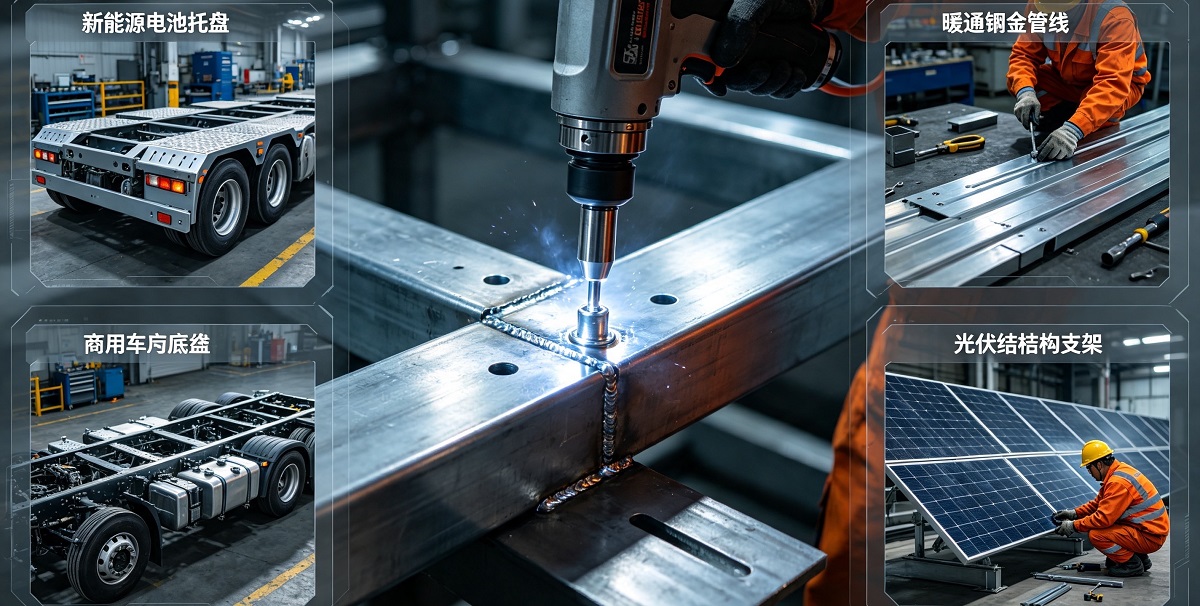
Industrial riveting tools span a range of actuation methods, pulling forces, and power sources. Choosing the appropriate tool architecture depends on volume requirements, mobility needs, joint material thickness, and shop-floor infrastructure.
Pneumatic and hydro-pneumatic riveters represent the standard for high-volume assembly lines. Utilizing compressed air coupled with hydraulic fluid intensification, these tools deliver high pull force in a compact physical form factor.
High Power-to-Weight Ratio: Hydro-pneumatic systems generate thousands of pounds of pulling force while remaining lightweight enough for shift-long manual operation.
Rapid Cycle Times: Air-actuated piston returns allow rapid cycle speeds, minimizing bottlenecking in fast-paced production lines.
Continuous Heavy-Duty Operation: With minimal moving electrical parts, pneumatic systems handle continuous industrial duty cycles with low thermal buildup.

Advancements in high-capacity lithium-ion batteries and brushless DC motors have transformed cordless riveting tools from light-duty repair devices into industrial production equipment.
Unrestricted Operator Mobility: Eliminating air lines prevents trip hazards and allows operators to move freely around large workpieces like trailers, buses, and modular construction frameworks.
Process Standardization: Modern cordless riveters feature digitally controlled brushless motors that maintain consistent stroke lengths and pulling forces regardless of battery charge state.
Shop Floor Flexibility: Cordless tools enable flexible workstation configurations without requiring dedicated pneumatic drops or overhead hose balancers.
For solid, semi-tubular, and delicate cold-formed fasteners, orbital and radial riveting machines offer process control beyond manual hand tools.
Orbital Riveting: A forming tool rotates at a fixed angle (typically 3 to 6 degrees), applying downward pressure to continuously roll the fastener head into shape with minimal lateral force.
Radial Riveting: The tool moves in a rosette pattern through the center of the rivet shank, displacing material smoothly without distorting surrounding delicate substrates like ceramics, plastics, or thin sheet metals.
Choosing professional riveting tools requires a structured evaluation of technical parameters, joint requirements, and human factors.
The choice of riveting tool must align directly with the specific mechanical properties and geometry of the fasteners being installed:
Standard Blind Rivets: Require moderate pulling force and stroke lengths optimized for aluminum or mild steel mandrels.
High-Strength Structural Rivets: Structural blind fasteners (such as Monobolt or interlock designs) demand higher pulling forces and specialized nosepieces to lock the mandrel flush with the rivet head.
Structural Lockbolts: Require heavy-duty installation tools with specialized collars and swaging jaws to deform retaining collars over threaded or grooved pins.
Parent Material Sensitivity: Delicate composites or thin-gauge alloys require precise force control to prevent matrix cracking or surface dimpling during head formation.
Worker fatigue and repetitive strain injuries directly affect product quality and manufacturing uptime. Industrial-grade riveting equipment incorporates key ergonomic features:
Vibration Dampening: Internal shock-absorption mechanisms isolate the operator's hands from the mechanical kickback produced when the mandrel snaps.
Mandrel Collection Systems (MCS): Integrated vacuum systems pull spent mandrels cleanly into a rear collection bottle, keeping work surfaces free of metal debris and preventing slip hazards.
Balanced Weight Distribution: Ergonomically contoured grips and balanced centers of gravity reduce wrist strain during multi-hour assembly shifts.
The following table compares the operational characteristics across primary industrial riveting tool categories to guide tooling selection.
| Tool Category | Power Source | Ideal Application | Pulling Force Range | Primary Advantage | Key Operational Limit |
| Hydro-Pneumatic | Compressed Air + Hydraulic Oil | Stationary assembly lines, high-speed sheet metal | 8 kN – 30+ kN | Excellent force-to-weight ratio, low maintenance | Requires air line infrastructure |
| Cordless Battery | Lithium-Ion Battery / Brushless Motor | Large-scale assembly, mobile field work, flexible lines | 10 kN – 25 kN | Complete mobility, smart process tracking | Weight of battery pack |
| Pneumatic Lockbolt Tools | High-Pressure Air | Commercial vehicles, railcars, structural steel | 20 kN – 60+ kN | Extreme clamp force, tamper-proof joint creation | Heavy tool body, high recoil |
| Radial / Orbital | Electric / Hydraulic Bench Units | Delicate assemblies, precision pivots, electronics | Controlled Form Force | Zero material swelling, perfect head aesthetics | Stationary machine setup only |
As manufacturers transition toward leaner production models and Industry 4.0 integration, specialized equipment manufacturers provide purpose-built tools that enhance efficiency and traceability.
In heavy manufacturing environments requiring high uptime under harsh operating conditions, Rocol Tools has built a strong reputation for durability and structural integrity.
Heavy-Duty Hydro-Pneumatic Engineering: Built with reinforced alloy bodies and hardened steel jaw assemblies, Rocol Tools equipment handles high-cycle structural riveting without premature jaw wear or hydraulic fluid degradation.
Thermal and Fluid Stability: Advanced seal packages in Rocol Tools pneumatic-hydraulic units prevent fluid bypass and maintain consistent stroke power even under high ambient temperatures and continuous operation.
Tool Longevity: Field-replaceable nose assemblies and accessible maintenance ports allow maintenance teams to perform quick routine service, minimizing line stoppages.

As automated manufacturing and quality assurance standards evolve, 4Woo focuses on intelligent fastening technology and modern ergonomic designs.
Smart Process Control: Selected 4Woo digital riveters incorporate electronic stroke sensors and cycle counters, providing clear visual feedback to operators to confirm full rivet setting before advancing to the next joint.
Adaptive Battery Management: Built for high-efficiency production, 4Woo cordless riveting systems utilize power electronics that prevent energy loss during idle times while maximizing pulls per battery charge.
Ergonomic Lightweight Construction: By utilizing high-strength composite housings, 4Woo tools reduce operator fatigue without sacrificing structural rigidity or durability.
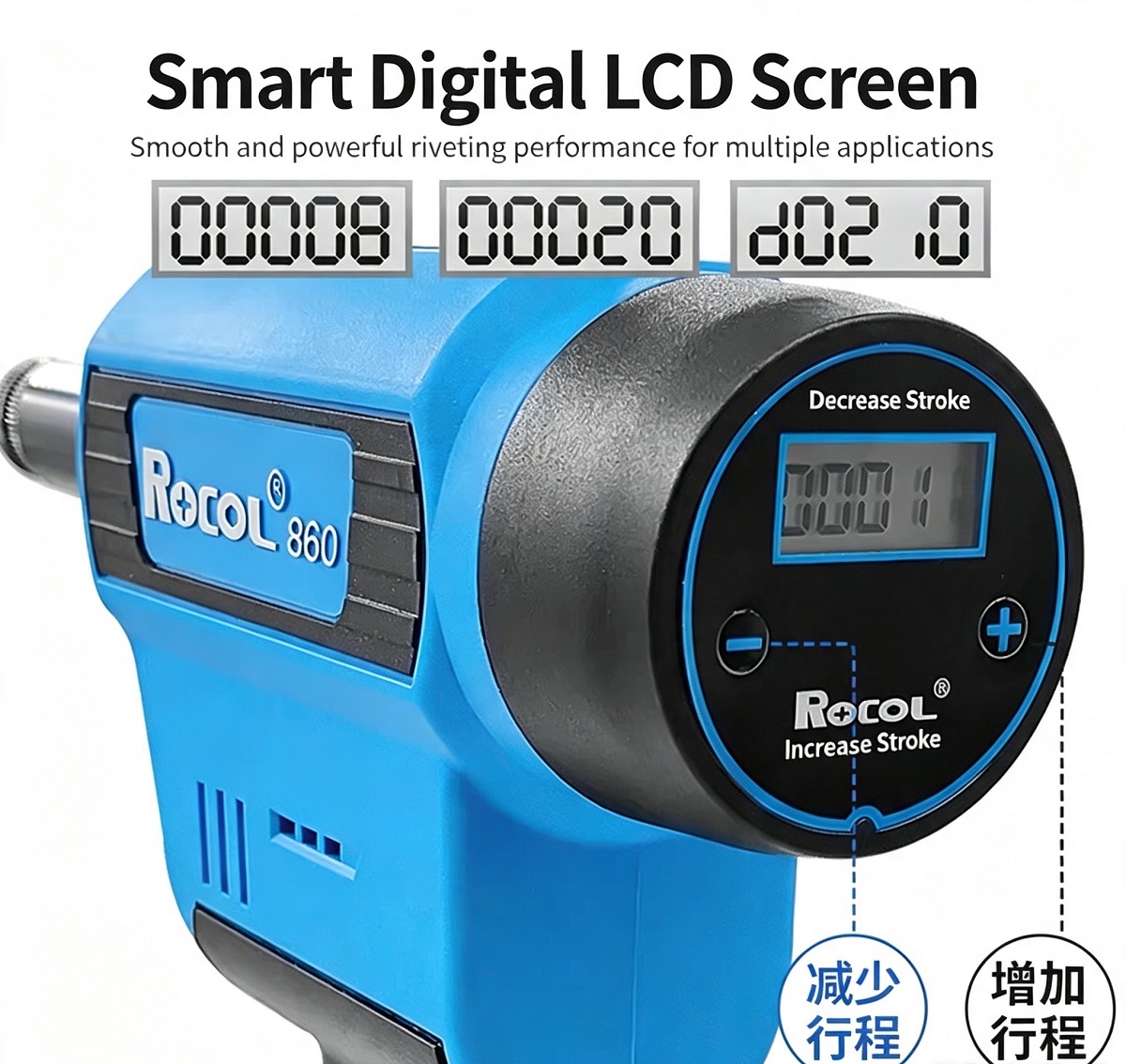
To maintain joint quality and extend the service life of high-performance riveting equipment, manufacturing facilities should implement structured preventive maintenance protocols.
Jaw Cleaning and Inspection
Spent mandrel shavings, oil residue, and metal dust accumulate inside the jaw housing over time. Clean the three-piece jaw sets daily using a wire brush and solvent, and inspect jaw teeth for rounding or chipping.
Air Line Lubrication and Filtration
For pneumatic systems, ensure air supplies pass through a clean filter-regulator-lubricator (FRL) unit. Water contamination in air lines causes internal corrosion and degrades hydraulic seals.
Hydraulic Fluid Top-Offs
Check hydro-pneumatic tool fluid levels periodically. Spongy trigger response or reduced stroke length typically indicates trapped air or low fluid levels within the hydraulic intensifier circuit.
Mandrel Slippage
Cause: Worn or clogged jaw teeth, improper nosepiece size.
Action: Clean jaw teeth, inspect for physical wear, or replace with genuine manufacturer nosepieces matched to the mandrel diameter.
Incomplete Rivet Setting
Cause: Insufficient air pressure, low hydraulic fluid, or inadequate tool pulling force rating for the fastener grade.
Action: Verify dynamic air pressure under load, top off hydraulic fluid, or upgrade to a higher-capacity unit like a heavy-duty model from Rocol Tools.
Mandrel Jamming in Guide Tubes
Cause: Damaged collection tube, bent mandrels, or insufficient vacuum suction in MCS-equipped tools.
Action: Clear the collection path, inspect the vacuum venturi valve, and clear packed debris from the rear collector.
Industrial fastening technology continues to advance alongside broader trends in light-weighting, automation, and data analytics.
The shift toward electric vehicles requires joining light aluminum alloys to high-strength steels and carbon-fiber composites. Because thermal joining methods like welding can degrade or warp these materials, blind riveting and lockbolting remain essential techniques. Specialized tools with adaptive force curves are becoming critical to prevent cracking composite layers while securing structural metals.
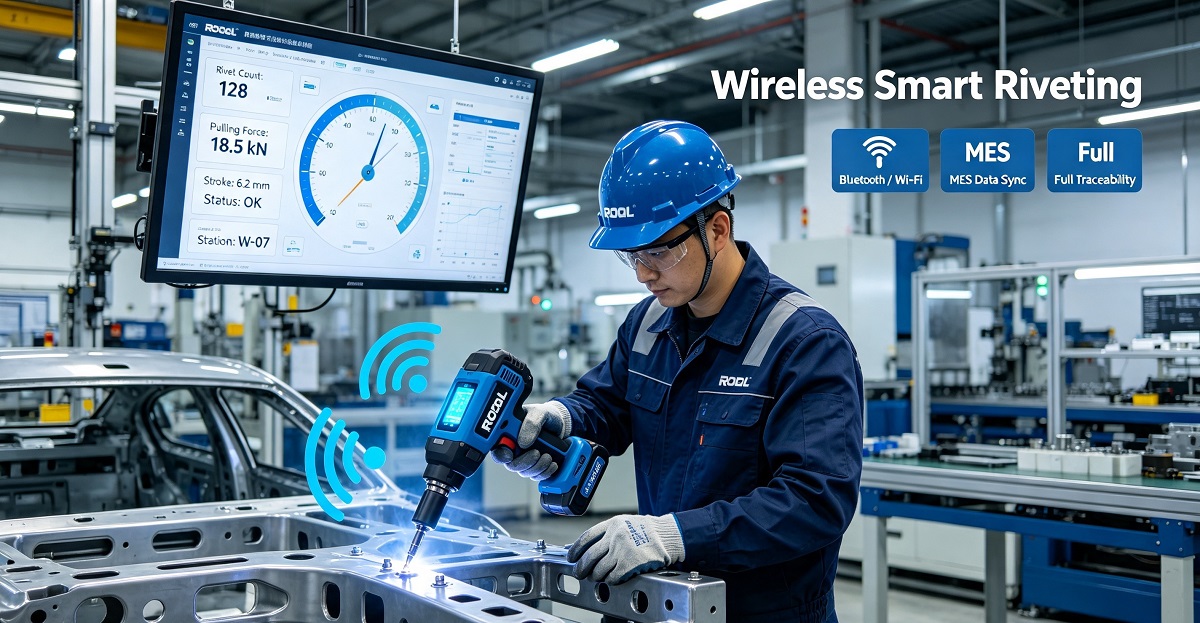
Smart assembly lines increasingly require confirmation that every fastener is set correctly. Connected riveting tools automatically record peak pulling force, stroke length, and total cycle duration for every installation step. This data is transmitted directly to Manufacturing Execution Systems (MES) to maintain complete quality traceability for every unit coming off the assembly line.
Selecting professional riveting tools requires balancing mechanical requirements, operator ergonomics, long-term tool durability, and smart monitoring capability. By evaluating joint specifications and integrating durable equipment—such as robust hydro-pneumatic options from Rocol Tools or smart digital systems from 4Woo—manufacturers can achieve lower defect rates, higher throughput, and consistent structural performance across every product built.


