
English


The gun is equipped with a 4.8MM guide nozzle, which can pull 5mm nails. For other specifications, the guide nozzle needs to be replaced first. The guide nozzle must be of the corresponding size to the nail to ensure smooth operation; otherwise, the nail may get stuck.
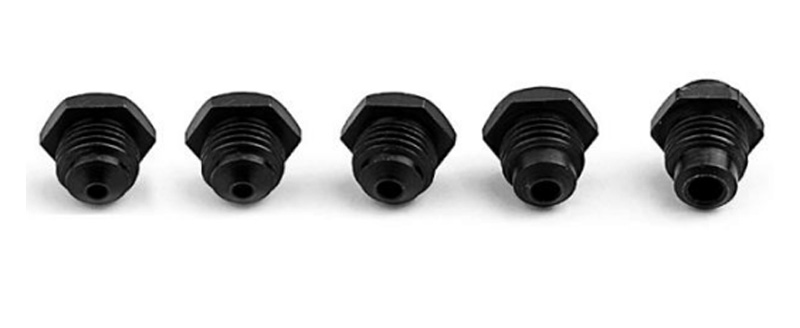
Within the capacity of the pull-pin gun for driving nails, achieving a complete breakage of the nail requires proper selection of the nail as well.
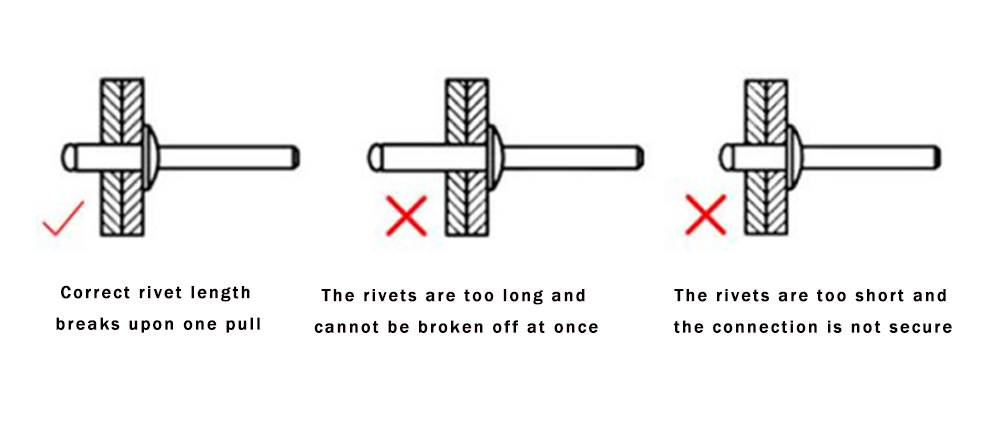
Correct rivet length - breaks upon one pull
Rivets are too long and cannot be broken off at once.
Rivets are too short and the connection is not secure.
If the pin core is too short, it will cause uneven force distribution between the pawl plate and the pawl sleeve, resulting in damage and seriously affecting the service life of the tool.
The length of the rivet is less than the stroke of the pull pin gun, and
The thickness of the sheet is less than the diameter of the pull pin, then
The specification of the rivet is 5*14, and the length of the rivet is 14mm; the stroke of the pull pin gun is 18mm. If the thickness of the sheet material is 4mm, then 14 - 4 = 10mm, which is less than the stroke of the pull pin gun. Therefore, it can be pulled through in one go.
Incorrect length of the trigger pin can cause damage to the gun and prevent it from functioning properly
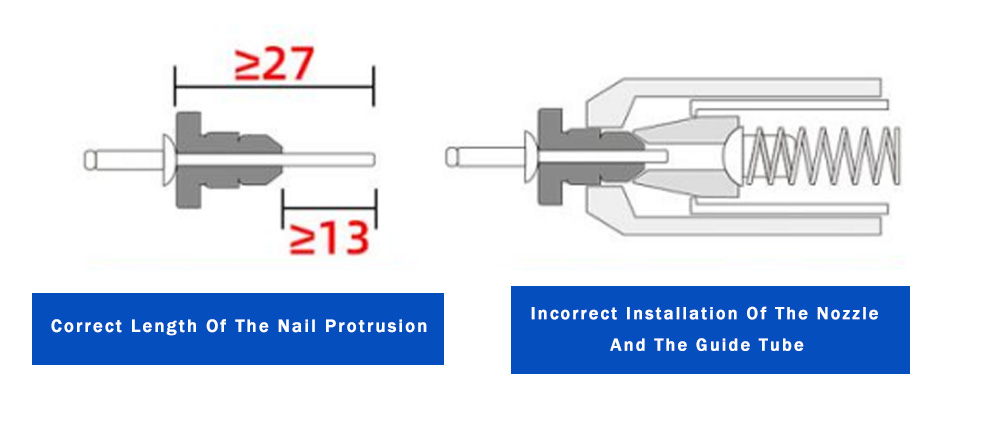

The correct length of the nail protrusion ensures that the nail clip can more effectively hold the nail core firmly. If the nail core is too short, it may cause problems such as inability to hold or insufficient holding. The exposed length should be ≥ 13mm. Incorrect installation of the guide nozzle will result in uneven force on the sleeve, causing the nail clip to break, deform, or get stuck.
A rivet gun (also called a pop rivet gun or blind riveter) is used to permanently fasten two or more materials such as metal sheets, plastic panels, or aluminum parts.
• Rivet gun
• Blind rivets (correct size)
• Drill and drill bit
• Materials to join
• Safety glasses
Rivet Diameter | Typical Drill Bit |
3.2 mm (1/8") | 3.3 mm |
4.0 mm | 4.1 mm |
4.8 mm (3/16") | 5.0 mm |
• Hole size should match the rivet diameter
• Make sure both pieces are aligned
Insert the blind rivet into the drilled hole.
The mandrel (center pin) should stick out.
Place the rivet mandrel into the nosepiece of the rivet gun.
Push the gun until the rivet head touches the surface.
Squeeze the handles of the rivet gun.
1、The gun pulls the mandrel
2、The rivet body expands on the backside
3、Materials become tightly clamped together
This means the rivet is fully installed.
Remove the tool — the rivet is finished.
Front side Back side
Rivet Head
▼
────────────── Metal sheet
│
│
▼
Expanded Rivet Body
(locks the materials)
The backside forms a bulb shape that holds the materials together.
❌ Hole too big → rivet will be loose
❌ Wrong rivet length → weak connection
❌ Rivet gun not fully seated → crooked rivet
❌ Pulling only once → rivet not fully set
✔ Choose rivet grip range correctly
✔ Use steel rivets for stronger joints
✔ Keep rivet gun perpendicular to the surface
✔ For large production, use pneumatic rivet guns
1. Drill hole
2. Insert rivet
3. Put mandrel into rivet gun
4. Squeeze handles
5. Mandrel snaps - rivet installed


