
English
Views: 0 Author: Site Editor Publish Time: 2026-08-20 Origin: Site


Whether you are operating an industrial assembly line, running a commercial automotive body shop, or executing metal fabrication projects in a home workshop, the longevity of your fastening tools directly impacts your bottom line. Among the most essential mechanical assembly devices, the blind rivet gun is a workhorse. However, trade technicians and procurement managers frequently ask: How long does a rivet gun last?
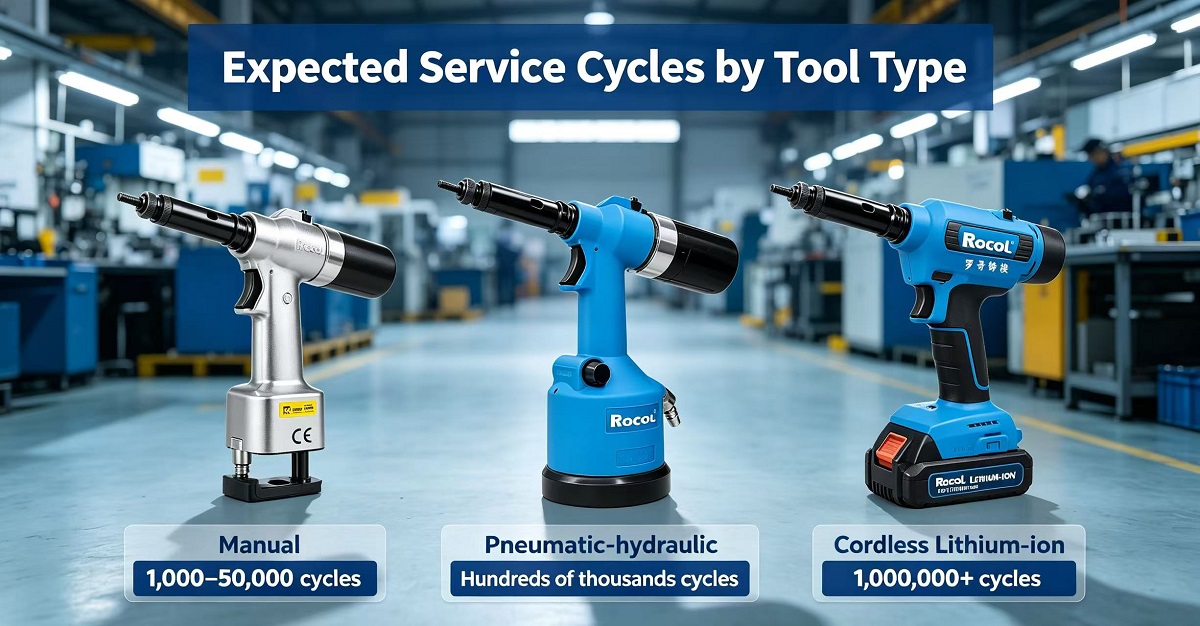
The short answer is that a rivet gun's lifespan ranges from 1,000 cycles (for budget consumer hand tools) to over 1,000,000 cycles (for heavy-duty industrial pneumatic-hydraulic systems). Expressed in time, a tool can last anywhere from a single project to more than 15–20 years of continuous service. The exact operational lifespan depends on actuation type (manual, pneumatic, or battery-electric), build metallurgy, fastener hardiness, shift duty cycles, and preventative maintenance routines.
In this technical guide, we break down the real-world lifespan expectancies of different rivet gun categories, analyze the internal components that fail first, evaluate top manufacturing standards, and outline actionable strategies to double or triple the service life of your tools.
To establish realistic operational expectations, we must evaluate rivet guns across three primary categories: manual hand tools, pneumatic-hydraulic air riveters, and cordless battery-powered units. Each tool category operates under different mechanical strain profiles and environmental conditions.
Manual plier-style or lever-action riveters rely entirely on mechanical leverage supplied by human force. Because they lack hydraulic fluid or electric motors, their failure points are purely mechanical.
Budget DIY Hand Tools (1,000 – 5,000 Cycles): Typically constructed with cast aluminum handles and single-piece unhardened carbon steel jaws. With frequent use on steel or stainless steel rivets, the internal jaws strip or the pivot pin housing warps within 1 to 3 years of light DIY work.
Professional Compound Lever / Lazy-Tong Tools (20,000 – 50,000 Cycles): Engineered with drop-forged alloy steel arms and hardened chrome-molybdenum (Cr-Mo) steel jaws. With routine jaw cleaning and greasing, professional manual tools easily last 5 to 10 years in trade environments.

Pneumatic-hydraulic riveters are the undisputed durability champions of industrial manufacturing. Driven by compressed air multiplying hydraulic oil pressure, these tools execute rapid setting strokes with minimal moving mechanical parts.
Standard Commercial Air Riveters: Average 250,000 to 500,000 cycles before requiring complete seal overhauls or jaw replacement (typically 3 to 7 years in medium-duty assembly).
Heavy Industrial Production Units: Leading industrial-grade pneumatic units—such as those manufactured by Rocol Tools—are built to exceed 1,000,000 cycles. Featuring hardened steel cylinders, aircraft-grade polyurethane seals, and precision-machined jaw cases, high-end pneumatic riveters from Rocol Tools regularly operate for 10 to 15+ years in continuous multi-shift factory environments when serviced properly.

Cordless battery tools offer unparalleled mobility on job sites and automotive repair floors. Their lifespan is determined by motor brush wear, electronic board longevity, planetary gear wear, and battery pack cell health.
Brushless Motor Units: Modern 18V/20V cordless riveters featuring brushless motors eliminate physical brush wear, lasting between 150,000 and 300,000 cycles (roughly 4 to 8 years of active trade use).
Battery Pack Limitations: While the mechanical gear assembly lasts for years, lithium-ion battery packs typically require replacement after 500 to 1,000 charge cycles (2 to 4 years of daily commercial use).

Why do two identical rivet guns operating in different shops have vastly different service lifespans? Tool longevity is governed by four critical operational variables.
| Operational Variable | Impact on Tool Lifespan | Best Practice for Maximum Longevity |
| Fastener Material Hardness | Pulling stainless steel or structural Monobolts increases internal jaw stress by 300% compared to soft aluminum rivets. | Match jaw hardness rating to rivet material; use high-tonnage tools for hard steel. |
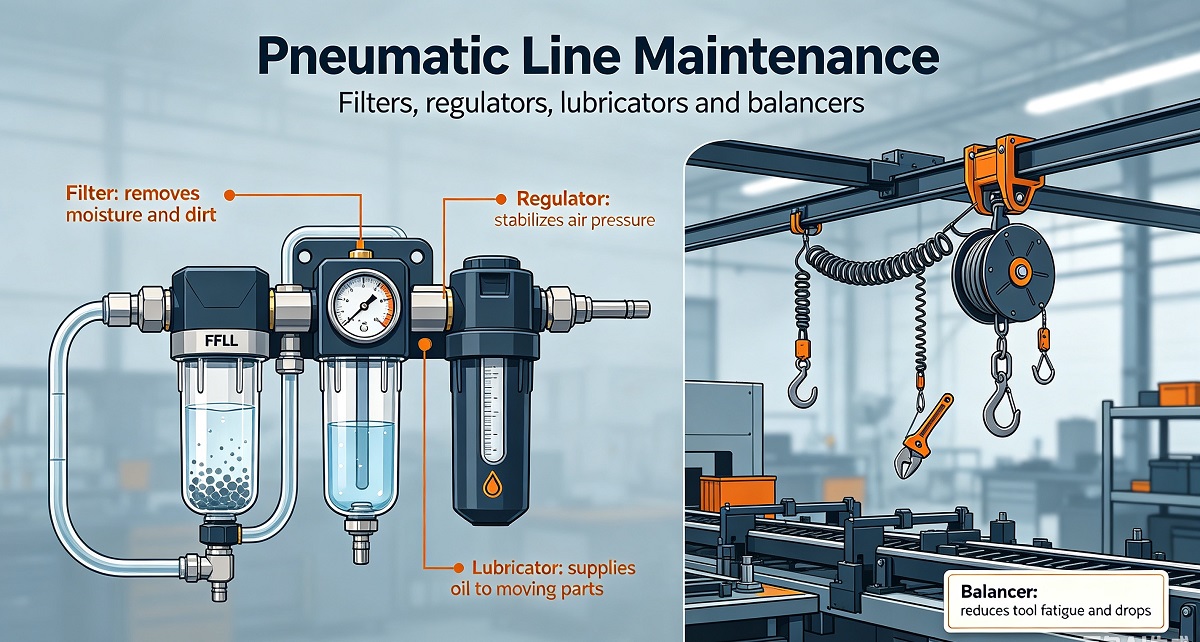
| Compressed Air Quality (Pneumatic) | Moisture and dirt in air lines erode internal pneumatic seals and cause cylinder pitting within months. | Install inline Filter-Regulator-Lubricator (FRL) units set to 5–6 bar (75–90 PSI). |
| Mandrel Jam Management | Forcing or prying stuck mandrels with screwdrivers damages the internal jaw housing and nosepiece threads. | Unscrew the outer nose cone properly to clear jammed stems safely. |
| Operator Handling & Storage | Dropping tools onto concrete floors cracks outer housings and misaligns hydraulic piston shafts. | Use overhead spring balancers on assembly lines and protective padded cases in field trucks. |
Setting 3/16" (4.8mm) or 1/4" (6.4mm) structural stainless steel rivets places exponentially higher mechanical loads on a tool's internal pulling mechanism than setting 1/8" (3.2mm) aluminum pop rivets. Consistently operating a tool at its absolute maximum capacity rating shortens component fatigue life.
Continuous rapid-fire riveting in high-volume production causes friction heat inside jaw housings and hydraulic fluid breakdown. High-performance industrial tools incorporate cooling fins, large oil reservoirs, and friction-reducing coatings to withstand non-stop 24/7 manufacturing shifts.
A rivet gun is a modular assembly. When a tool "dies," it is rarely the entire unit that fails; rather, specific wear components reach the end of their service life. Understanding these wearable parts allows technicians to perform low-cost rebuilds rather than discarding expensive tools.
The three-piece jaw set inside the nosepiece experiences intense abrasive friction as it bites into hard steel mandrels. Over time, the diamond-pattern serrations on the jaws wear smooth, leading to slippage where the tool pulls without snapping the mandrel.
Lifespan of Jaws: 5,000 to 25,000 rivets. Jaws are inexpensive, consumable parts designed for quick field replacement.

In pneumatic-hydraulic units, internal rubber and polyurethane O-rings seal oil under immense pressure (often exceeding 3,000 PSI inside the pulling cylinder). Over 2 to 5 years, heat, friction, and fluid contamination cause seals to harden, crack, or leak, resulting in loss of stroke length.
Internal coil springs push the jaw assembly forward after every cycle. Millions of compression cycles eventually cause spring fatigue or breakage, preventing the jaws from opening to accept the next rivet stem.
Selecting reliable equipment from established manufacturing standards ensures ready access to replacement seals, mandrels, and jaw sets—extending overall tool utility across decades.
For factory assembly floors, automotive manufacturing plants, and heavy fabrication shops where tool downtime translates to thousands of dollars in lost production, Rocol Tools represents the industry benchmark. Engineered specifically for extended service life, Rocol Tools builds pneumatic-hydraulic riveters featuring ultra-hardened chrome-vanadium jaw cases, dual-stage air filtration intakes, and heavy-duty polyurethane seals. Their modular hydraulic cylinder design allows maintenance teams to execute complete seal rebuilds in under 15 minutes, allowing a single Rocol Tools air riveter to comfortably perform over 1,000,000 cycles across a decade of service.
For custom automotive fabricators, HVAC contractors, and field service technicians who demand versatility, mobility, and rugged durability, 4Woo offers an impressive range of ergonomic riveting tools, cordless adapters, and multi-head attachment kits. Designed to deliver smooth setting power and fatigue-free handling, tools from 4Woo utilize reinforced alloy drive mechanisms and precision-ground nosepieces. Equipping field trucks or workshop tables with 4Woo installation kits ensures technicians can transition seamlessly between standard blind rivets and threaded rivet nuts without risking premature tool failure.
Implementing a strict maintenance schedule is the single most effective way to ensure your rivet gun reaches its maximum potential lifespan.
Clean the Jaw Housing: Unscrew the outer nose cone, remove the jaw case, and use a stiff brass wire brush to clear trapped metal dust and stem shavings from the jaw teeth.
Lubricate Internal Slopes: Apply a light drop of high-temperature synthetic grease to the outside curved slopes of the jaws (never on the serrated gripping teeth). This ensures smooth sliding action against the jaw cone.
Add Air Tool Oil (Pneumatics): Add 3 to 5 drops of pneumatic tool oil into the air inlet connector before connecting shop air lines.
Inspect O-Rings and Seals: Check for hydraulic oil residue around the air cylinder base and bleed screw.
Check Hydraulic Oil Level: Top off anti-wear hydraulic oil (ISO VG 32 or VG 46) and purge internal air bubbles to restore maximum stroke length.
Inspect Nosepiece Threads: Ensure nosepiece threads are tight and undamaged to prevent cross-threading under load.
Ultimately, a rivet gun's operational lifespan is defined by tool quality, usage intensity, and preventative maintenance care:
Budget Consumer Hand Tools: Last 1,000 to 5,000 cycles (1 to 3 years of occasional light home DIY use).
Professional Cordless & Tradesman Tools: Last 100,000 to 300,000 cycles (4 to 8 years of active job site or auto repair work with tools from brands like 4Woo).
Heavy Industrial Pneumatic Systems: Last 500,000 to over 1,000,000+ cycles (10 to 15+ years of continuous factory production with equipment from manufacturers like Rocol Tools).
By replacing worn gripping jaws promptly, maintaining clean lubricated air lines, topping off hydraulic oil, and choosing industrial-grade tooling from trusted brands like Rocol Tools and 4Woo, you can ensure your riveting equipment delivers reliable, rock-solid joints for millions of cycles to come.


