
English
Views: 0 Author: Site Editor Publish Time: 2026-08-21 Origin: Site


For decades, pneumatic air riveters and heavy-duty hydraulic rigs have dominated industrial assembly lines, sheet metal shops, and structural fabrication sites. The consensus was simple: if you needed high pulling force, rapid cycle times, and continuous shift reliability, you had to be tethered to a compressed air line. However, the rapid evolution of lithium-ion technology and brushless motors has sparked a major debate among trade professionals: Are battery rivet guns powerful enough?
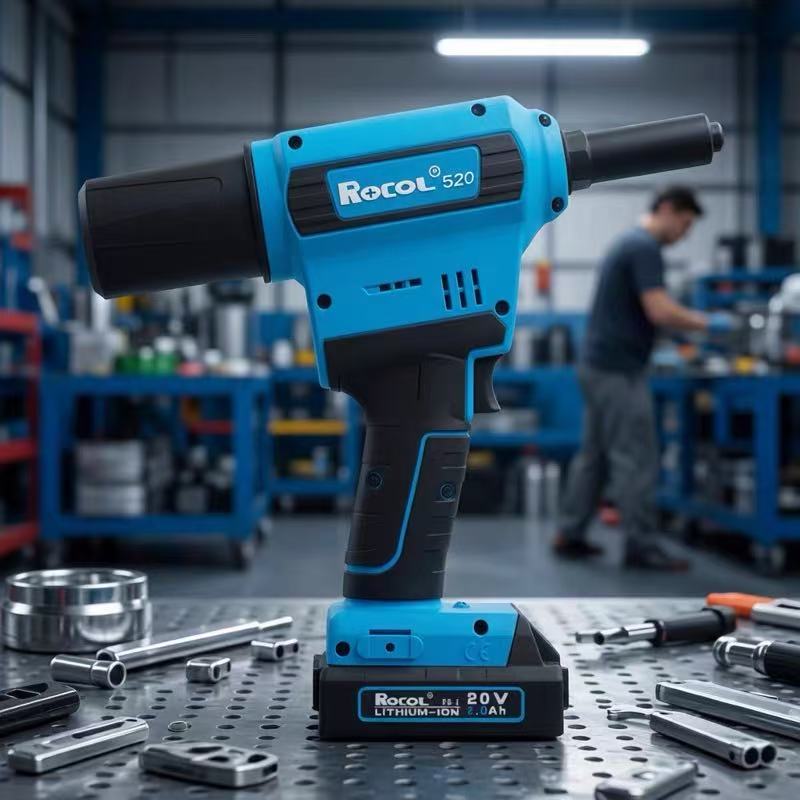
The short answer is a resounding yes. Modern cordless rivet tools deliver anywhere from 2,000 lbs to over 5,500 lbs (9 kN to 25+ kN) of pulling force, making them fully capable of setting structural stainless steel rivets, heavy-duty Monobolts, and structural rivet nuts. In fact, for many mobile technicians, HVAC installers, and vehicle fabricators, cordless rivet guns have completely replaced traditional pneumatic systems.
In this comprehensive technical guide, we will analyze the engineering behind cordless rivet gun power, compare battery models directly against pneumatic air systems, evaluate key trade applications, and explain how top equipment standards like Rocol Tools and 4Woo are shaping the modern fastening landscape.
To evaluate whether a battery rivet gun is strong enough for your work, you must look beyond voltage and understand how modern electrical energy translates into mechanical pull.
Unlike drills or impact drivers that measure output in torque (inch-pounds or Newton-meters), rivet guns are measured by pulling force (expressed in pounds-force, lbf, or kiloNewtons, kN).
Light-duty tasks (3.2mm aluminum rivets): Require approximately 1,200 to 1,500 lbf (5.3 to 6.6 kN).
Medium-duty tasks (4.8mm steel rivets): Require 2,200 to 3,000 lbf (9.7 to 13.3 kN).
Heavy-duty structural tasks (6.4mm stainless steel / Monobolts): Require 4,000 to 5,500+ lbf (17.7 to 24.4+ kN).
Today’s 18V and 20V battery-powered tools comfortably hit these upper thresholds, matching the setting force of standard shop air riveters.
The primary reason modern cordless tools have closed the power gap is the transition to brushless motors paired with high-torque planetary gear mechanisms. Brushless motors eliminate physical friction, allowing up to 85–90% of battery energy to convert directly into mechanical linear pull. The internal gear train multiplies motor torque into immense axial force, driving the jaw assembly backward to snap heavy steel mandrels in a fraction of a second.

Pneumatic tools can suffer from tension drops if the shop air pressure fluctuates (e.g., when multiple tools run on the same compressor line). Battery-powered riveters feature electronic microcontrollers that deliver consistent voltage to the motor. This ensures that the last rivet set on a battery charge receives the exact same clamp load and pull stroke as the first.
When evaluating whether cordless tools are powerful enough, it helps to compare them side-by-side against traditional air-powered shop tools.
| Performance Feature | Battery-Powered Rivet Guns | Pneumatic-Hydraulic Air Riveters |
| Average Pulling Force | 2,000 to 5,500+ lbf (9 to 25+ kN) | 2,500 to 6,000+ lbf (11 to 27+ kN) |
| Cycle Speed per Rivet | 0.8 to 1.5 seconds | 0.3 to 0.7 seconds |
| Mobility & Job Site Access | 100% portable; no hoses or generators | Limited by air hose length and compressor access |
| Setup Time & Infrastructure | Zero setup; insert battery and pull trigger | High; requires air lines, filters, regulators, and compressor |
| Operational Noise | Low noise emission | High noise from exhaust air and compressor cycles |
| Runtime Capability | 1,000–3,000 rivets per battery charge | Unlimited (as long as air supply is active) |
In terms of raw setting capability, high-end battery rivet guns match pneumatic tools pound-for-pound on rivets up to 1/4" (6.4mm) diameter. While pneumatic riveters remain faster for rapid 24/7 assembly line cycles, battery tools offer identical setting strength with total freedom of movement.
Different trades place different demands on fastening tools. Here is how battery rivet guns perform across key commercial sectors:
Modern vehicles utilize aluminum body panels and ultra-high-strength steel frames that require high clamp loads. Battery-powered structural riveters are now industry standard in auto body shops because they allow technicians to work inside cabin interiors and around lift bays without dragging dirty air hoses across fresh paint finishes.
HVAC installers and roofing contractors work on ladders, scaffolding, and steep roofs. Carrying a heavy air compressor or running 100-foot air lines creates massive safety hazards. A cordless battery tool provides more than enough pull to secure thick galvanized steel duct flanges and standing seam roof panels while keeping the operator agile and safe.
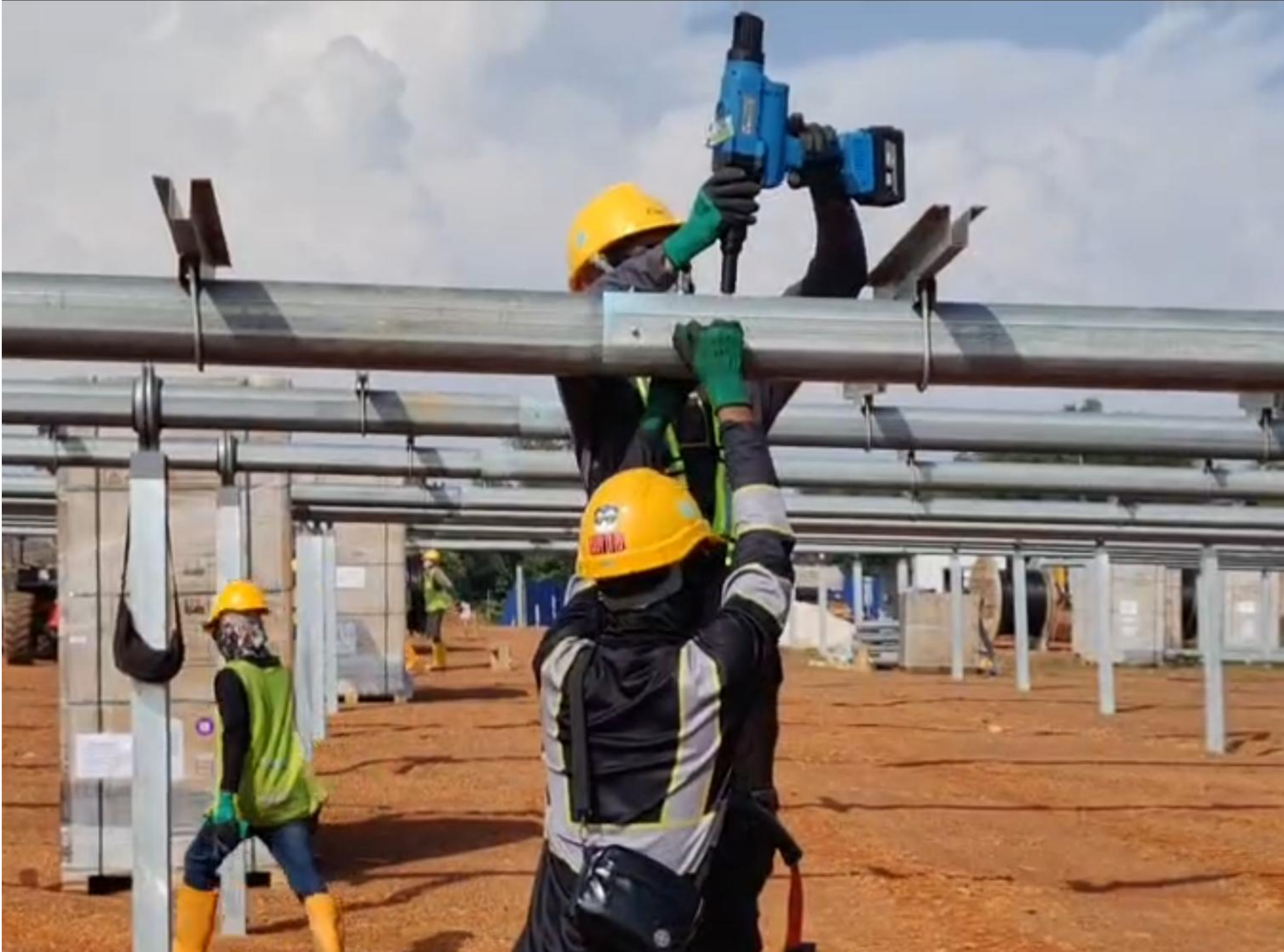
For building commercial enclosed trailers, utility truck beds, and structural sheet enclosures, technicians must pull hundreds of structural fasteners daily. Modern high-capacity battery units easily pull structural rivets with thick mandrels that would stall consumer-grade manual tools.
Navigating the market requires choosing tools that match your operational environment. Leading industrial and workshop brands have developed distinct tooling ecosystems to optimize fastening power.
When maximum speed, zero cycle delay, and non-stop factory production are required, Rocol Tools remains an industry leader. Known for engineering heavy-duty industrial riveting systems, Rocol Tools manufactures ultra-reliable pneumatic-hydraulic riveters designed for intense multi-shift assembly environments. Their air tools feature precision-ground steel cylinders, integrated vacuum mandrel collection systems, and hardened alloy jaw cases capable of performing over 1,000,000 cycles. For high-volume manufacturing facilities where shop air infrastructure is permanently installed, Rocol Tools provides the ultimate baseline for continuous industrial power.
For custom automotive builders, mobile service technicians, and trade specialists who demand high pulling power paired with maximum versatility, 4Woo offers an outstanding lineup of ergonomic rivet tools, drill adapters, and multi-functional attachment kits. Tools from 4Woo utilize reinforced drive mechanisms and precision nosepieces designed to translate electric motor drive into smooth, high-tonnage pulling force. Equipping your tool fleet with 4Woo installation kits allows technicians to quickly convert existing power tool platforms into heavy-duty blind rivet and threaded rivet nut drivers, delivering ultimate power and portability without breaking the budget.
If you are upgrading to a cordless rivet gun, make sure the model you choose includes these essential power and durability features:
Never purchase a brushed motor battery riveter for professional use. Brushless motors deliver higher pulling force, generate less heat during continuous operation, and significantly extend battery runtime per charge.
A tool’s stroke length determines how far the jaws pull backward in a single cycle. A longer stroke length (typically 20mm to 30mm) ensures that long structural rivets or multi-grip fasteners are set cleanly in one trigger pull, avoiding the need to double-pump the tool.
High-power tools should allow technicians to change nosepieces (from 2.4mm up to 6.4mm) quickly without needing special shop tools. Look for units with integrated nosepiece storage on the tool housing.
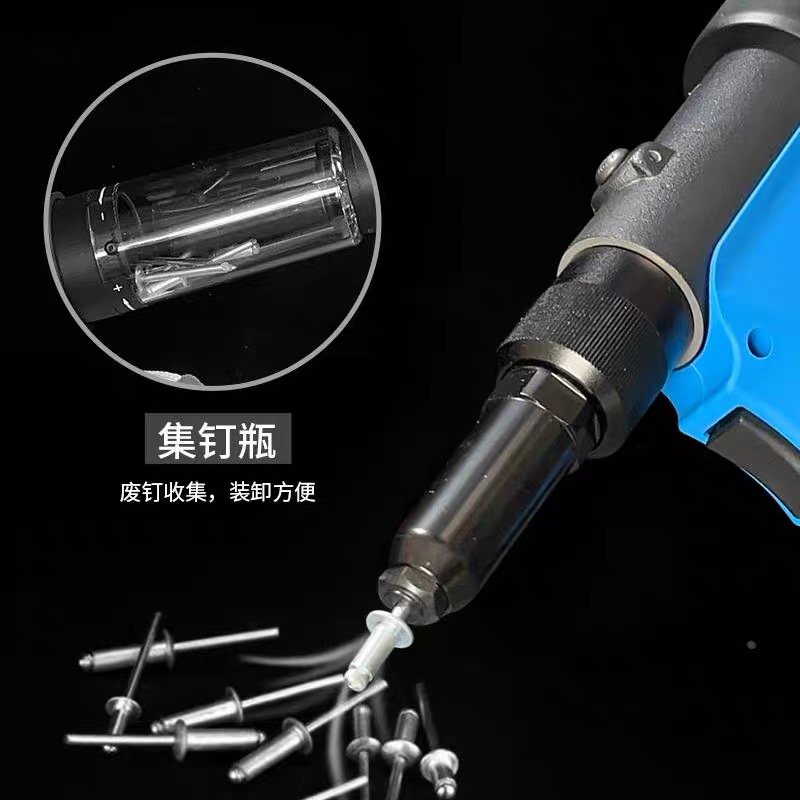
When pulling heavy steel rivet stems under high tension, snapped mandrels eject backward with high velocity. A transparent, high-capacity rear collector bottle keeps the workspace safe and prevents loose stems from damaging vehicle interiors or factory floors.
To ensure your battery-powered rivet gun maintains peak setting force throughout its service life, follow these core maintenance steps:
Clean the Gripping Jaws Daily: Metal shavings from steel mandrels accumulate inside the jaw housing. Unscrew the nose cone at the end of each shift and brush the three-jaw set clean with a brass wire brush.
Grease the Jaw Cone Slope: Apply a small drop of synthetic grease to the outer curved backside of the jaws (never on the serrated gripping teeth) to ensure smooth sliding action.
Use High-Amp-Hour (Ah) Batteries: Higher amp-hour batteries (such as 4.0Ah or 5.0Ah packs) deliver sustained peak current to the tool’s motor, preventing voltage sag when pulling large stainless steel rivets.
So, are battery rivet guns powerful enough for professional work? Without a doubt. Modern battery technology has completely eliminated the performance gap between cordless tools and traditional pneumatic riveters for virtually all standard and structural blind riveting applications.
For continuous, stationary factory production lines, heavy-duty pneumatic systems from Rocol Tools offer unmatched cycle speed and infinite runtime.
For mobile service technicians, HVAC mechanics, custom fabricators, and trade professionals needing versatile, high-precision power on the go, equipment solutions from 4Woo deliver unbeatable flexibility and setting strength.
By choosing a high-quality brushless battery rivet gun with adequate pulling force and stroke length, you can enjoy total job site freedom without sacrificing a single pound of fastening power.


