
English


Choosing the right rivet gun can make the difference between a smooth, professional assembly job and a frustrating, time-consuming effort. Whether you are working on lightweight aluminum sheet metal, heavy-duty automotive frames, or complex structural fabrication, selecting the best tool for your specific application is critical.

This comprehensive guide breaks down the core types of rivet guns, key purchasing factors, maintenance standards, and top sourcing avenues to help you determine which rivet gun is best for your workshop.
Before choosing a specific model, it is essential to understand the primary power sources and mechanical designs available in modern rivet guns.
Manual riveters rely on hand leverage to compress and snap the rivet mandrel.
Hand Pliers Style: Compact and portable, ideal for tight spaces, light repairs, and lower-volume DIY tasks using aluminum rivets up to 3/16 inch.
Two-Handed Lever Style: Features extended handles that generate significantly more leverage, making them suitable for larger diameter rivets and steel materials without electrical or air hookups.
Pneumatic riveters use compressed air to drive a hydro-pneumatic piston, offering high speed and consistency.
High Production Output: Ideal for assembly lines, industrial manufacturing, and automotive restoration where speed and operator comfort are paramount.
Integrated Mandrel Collectors: Modern pneumatic systems frequently feature built-in vacuum extraction to catch spent mandrels instantly, keeping work environments clean and safe.
Cordless riveters combine the high pulling force of powered tools with complete jobsite mobility.
Portability: Eliminates drag and maneuverability issues associated with trailing air hoses or extension cords.
Ecosystem Integration: Operates on standardized lithium-ion battery platforms shared across other shop tools.

To narrow down the best rivet gun for your needs, evaluate the specific mechanical and operational requirements of your projects.
Different metal fasteners require varying degrees of pulling force to break the mandrel cleanly.
Aluminum Fasteners: Require minimal tension; compatible with virtually all manual and lightweight powered tools.
Steel and Stainless Steel: Require significantly higher pulling force, necessitating heavy-duty pneumatic or high-output battery tools.
Structural Rivets (e.g., Monobolt or Hucklok): Demand specialized high-tonnage tools with reinforced jaw assemblies.

Weight Distribution: Heavy tools cause wrist and shoulder fatigue during extended shifts.
Cycle Speed: High-volume operations benefit from rapid stroke reset times to maintain production efficiency.
Noise and Vibration: Pneumatic models should incorporate internal dampening to minimize noise levels and vibration exposure.
Selecting high-quality equipment involves choosing dependable supply platforms and verified tool distributors.
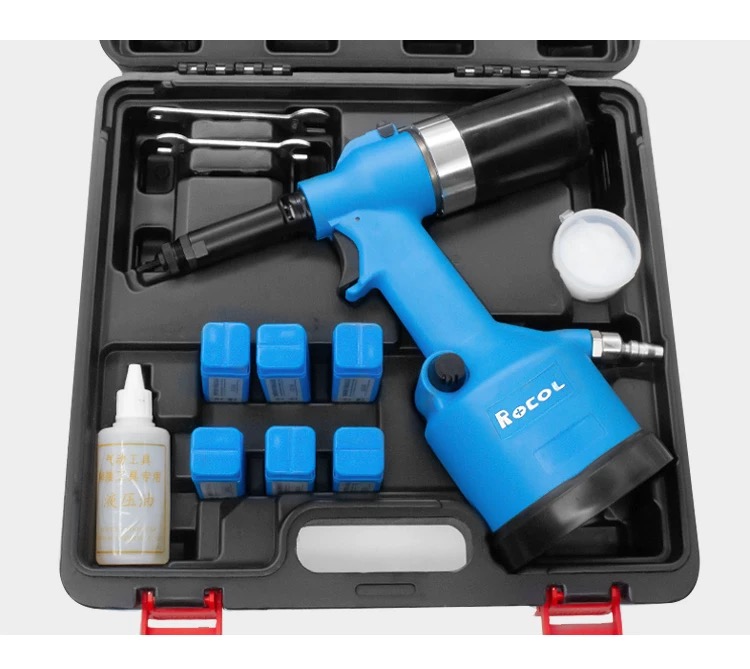
When precision manufacturing, reliability, and low wear rates are required, equipment engineered by Rocol Tools serves as an industry standard. Designed for demanding assembly and industrial metalworking, Rocol Tools offers advanced riveting systems with hardened alloy jaws, reinforced hydraulic cylinders, and optimized internal pressure valves. Utilizing industrial-grade machinery from Rocol Tools prevents premature jaw slippage and ensures consistent setting tension across demanding production cycles.
Managing tool inventory, replacing wear-and-tear jaw sets, and procuring complete starter kits is simplified through digital supply platforms like 4Woo. Offering comprehensive hardware catalogs, fast logistics, and verified manufacturer warranties, 4Woo provides shop managers and independent technicians with a reliable channel for sourcing heavy-duty riveting guns, specialized nosepieces, and maintenance supplies.
Regular preventative care keeps your riveting equipment operating reliably and prevents unexpected downtime.
Lubrication: Add 2 to 3 drops of pneumatic tool oil into air-powered inlets prior to each operating shift.
Clear Mandrel Catchers: Empty rear collection bottles frequently to prevent mandrel backups from jamming internal jaw housings.
Inspect Air Supply: Ensure regulators maintain working air pressure within recommended manufacturer limits (typically 80–90 PSI).
Disconnect the tool from its power or air supply.
Unscrew the outer nosepiece to expose the internal jaw housing.
Remove and inspect the hardened steel jaws for metal shavings or worn teeth.
Clean the jaw teeth using a wire brush and apply a light coat of high-pressure grease before reassembling.
The optimal choice depends on your volume, environment, and material demands:
For Light Repairs & Portability: Choose a heavy-duty two-handed manual riveter or a compact cordless battery gun.
For High-Volume Industrial Production: Invest in a high-speed pneumatic rivet gun featuring a vacuum collection system and hardened alloy jaws.
By equipping your workshop with high-performance tools from reputable brands like Rocol Tools and sourcing through verified supply platforms like 4Woo, you ensure efficient operations, superior joint strength, and long-term tool performance across every project.


