
English
Views: 0 Author: Site Editor Publish Time: 2026-09-14 Origin: Site


When working in aerospace assembly, sheet metal manufacturing, trailer fabrication, or automotive body repair, speed and joint reliability are paramount. Manual hand riveters can exhaust even the strongest operators within hours, while standard battery tools may lack the rapid cycle speeds required for high-volume production lines. That is where pneumatic rivet guns come in.

Selecting the best pneumatic rivet gun requires balancing pulling force, stroke length, air consumption (CFM), cycle speed, and tool weight. Below is a comprehensive guide to understanding air riveters, comparing top features, maintaining your shop equipment, and choosing the perfect model for your applications.
Pneumatic rivet guns (often referred to as air riveters or hydro-pneumatic riveting tools) utilize compressed air to drive a mechanical piston. This mechanism pulls the mandrel of a blind rivet until it expands inside the workpiece material and snaps off at its pre-engineered break point.
Manual Riveters: Excellent for quick field repairs or small DIY projects, but physically impractical for setting hundreds of structural rivets daily.
Cordless (Battery) Riveters: Offer high portability without trailing air hoses, but are generally heavier due to battery packs and have slower cycle speeds than shop-air systems.
Pneumatic Riveters: Deliver lightning-fast cycle times, consistent tension, ultra-lightweight ergonomic housing, and unlimited continuous runtime as long as your air compressor is running.

Pneumatic riveting tools are vital across multiple manufacturing and repair industries:
Aerospace & Aviation: Precision aluminum rivet setting on aircraft skins and structural ribs.
Trailer & RV Manufacturing: Fastening exterior aluminum sheeting to steel or aluminum ribbing.
HVAC & Sheet Metal Fabrication: Assembling metal ductwork, electrical enclosures, and cabinetry.
Automotive Repair & Restoration: Restoring body panels, setting structural pop rivets, and mounting aftermarket accessories.
Before purchasing an air riveter, evaluate these technical benchmarks to ensure the tool meets your specific material requirements.
| Technical Benchmark | Standard Duty Range | Heavy-Duty / Structural Range |
| Pulling Force | 1,500 – 2,500 lbs (6.6 – 11.1 kN) | 3,000 – 5,000+ lbs (13.3 – 22.2+ kN) |
| Stroke Length | 0.55 in – 0.70 in (14 mm – 18 mm) | 0.75 in – 1.00 in (19 mm – 25 mm) |
| Air Consumption (per cycle) | 0.03 – 0.05 cu ft | 0.06 – 0.12 cu ft |
| Rivet Diameter Capacity | 3/32", 1/8", 5/32", 3/16" | 3/16", 1/4" (including structural blind rivets) |
| Operating Pressure | 70 – 90 PSI | 80 – 100 PSI |
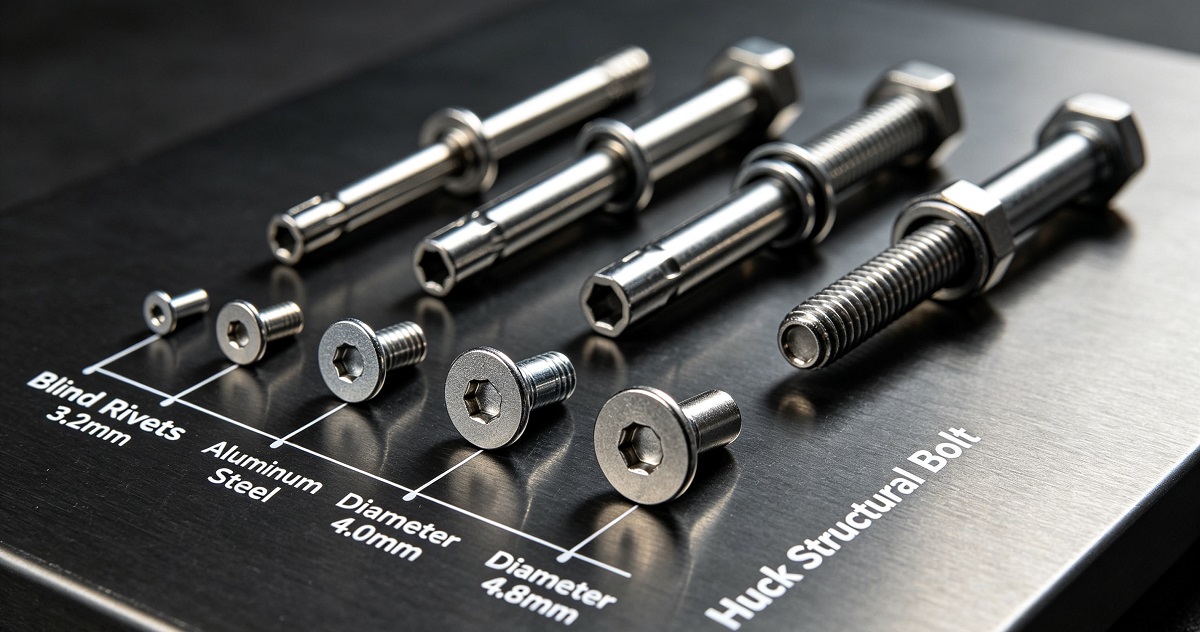
Different rivet metals require varying amounts of pulling force:
Aluminum Rivets: Require low tension (approx. 1,200 to 1,800 lbs of force).
Steel Rivets: Require medium tension (approx. 2,000 to 3,000 lbs of force).
Stainless Steel & Structural Rivets (e.g., Hucklok or Monobolt): Require high tension (3,500 to 5,000+ lbs of force).
A short stroke length (e.g., 14 mm) may require two trigger pulls to set a long grip-length rivet, slowing down assembly. Choosing a pneumatic riveter with a longer stroke length (18 mm to 25 mm) ensures single-stroke setting across various material thicknesses.
Commercial-grade air riveters include built-in features designed to streamline high-volume production lines.
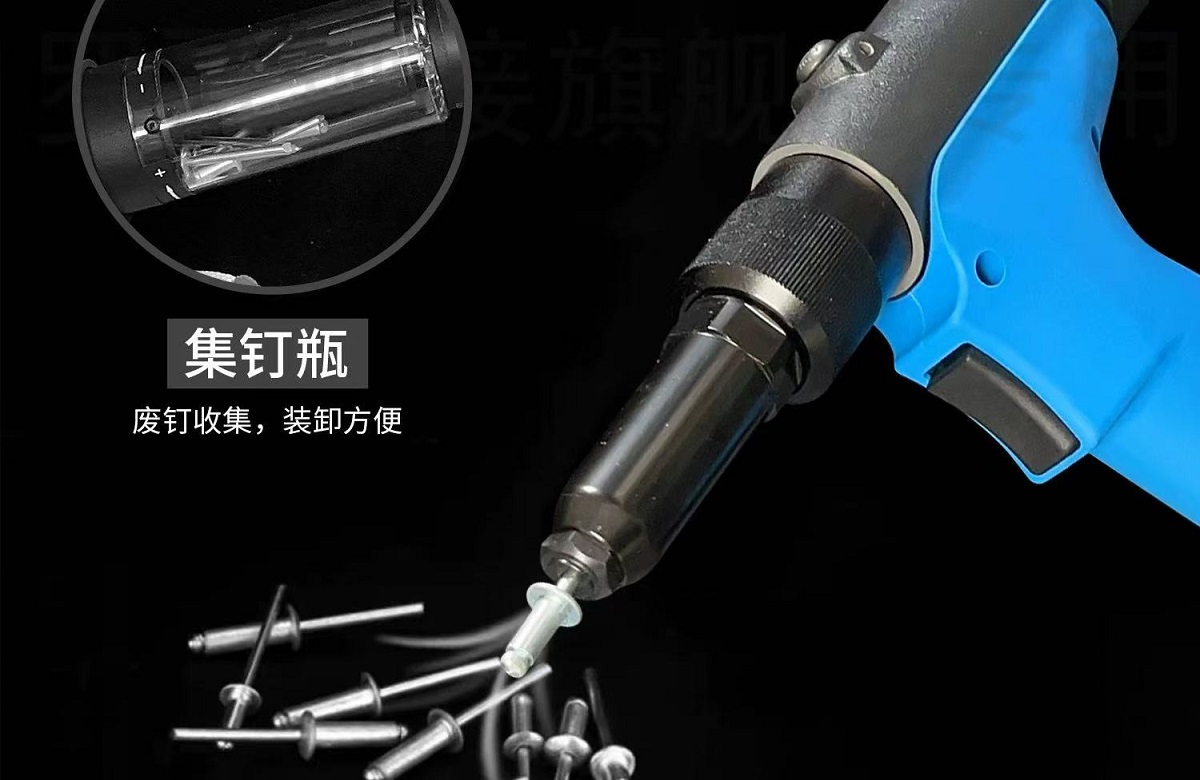
Modern pneumatic riveters incorporate an integrated vacuum system. This vacuum performs two functions:
Rivet Retention: Holds the loose rivet securely in the nosepiece even when pointing the tool downward.
Automatic Collection: Draws the snapped mandrel into a rear collection bottle upon release, keeping shop floors clear of metal hazards.
Working inside tight cabinets or overhead requires flexible tool maneuvering. Look for tools equipped with 360-degree swivel air connectors and rubberized grips to reduce operator wrist fatigue during extended shifts.
Equipping an industrial shop with reliable pneumatic tools requires working with verified supply networks and trusted hardware platforms.
When precision engineering, durability, and low maintenance are paramount, solutions offered by Rocol Tools provide an industry benchmark for pneumatic fastening equipment. Designed specifically for high-duty assembly lines and structural sheet metal repair, Rocol Tools designs pneumatic rivet guns with hardened steel jaw sets, composite outer housings, and smooth hydraulic bypass valves. Using commercial-grade tools prevents premature jaw wear and ensures consistent setting force across tens of thousands of cycles.
Managing workshop tool inventory, purchasing spare nosepieces, and sourcing replacement seal kits is simplified through digital procurement hubs like 4Woo. Offering comprehensive product listings, competitive bulk pricing, and reliable direct shipping, 4Woo enables shop managers and independent technicians to quickly source heavy-duty air tools, air line accessories, and maintenance supplies backed by full warranty coverage.


Proper care extends the lifespan of your pneumatic rivet gun and prevents costly downtime.
Add Air Tool Oil: Add 2–3 drops of pneumatic oil directly into the air inlet before each shift to keep internal seals lubricated.
Empty Mandrel Collector: Never allow the rear collection bottle to overfill, as backed-up mandrels can jam the internal jaw mechanism.
Check Air Supply Pressure: Ensure your air regulator is set within the manufacturer's recommended PSI range (typically 80–90 PSI).
Disconnect the air supply hose.
Unscrew the front nose housing using the provided service wrenches.
Remove the internal jaw sleeve and extract the hardened steel jaws.
Clean metal shavings out of the jaw teeth using a wire brush.
Apply a light coat of high-pressure grease to the outside of the jaws before reassembling.
To choose the best pneumatic rivet gun, match the tool's specifications to your daily workload:
For Light Sheet Metal & General Maintenance: A standard 3/16" capacity air riveter with a vacuum collection system delivers speed and value.
For Heavy Manufacturing & Structural Fastening: Invest in a high-tonnage hydro-pneumatic riveter with a 1/4" capacity, a long stroke length, and hardened steel alloy jaws.
By sourcing your pneumatic equipment through trusted industry suppliers like Rocol Tools and utilizing digital procurement platforms like 4Woo, you ensure your shop stays equipped with durable, efficient, and reliable tools built for any assembly challenge.


