
English
Views: 0 Author: Site Editor Publish Time: 2026-10-14 Origin: Site


In the fast-paced realms of modern manufacturing, structural steel fabrication, commercial transportation, and aerospace engineering, selecting the right fastening technology can mean the difference between long-term durability and structural failure. When joining thick metal sheets, high-strength alloys, and load-bearing components, traditional fastening methods often fall short.
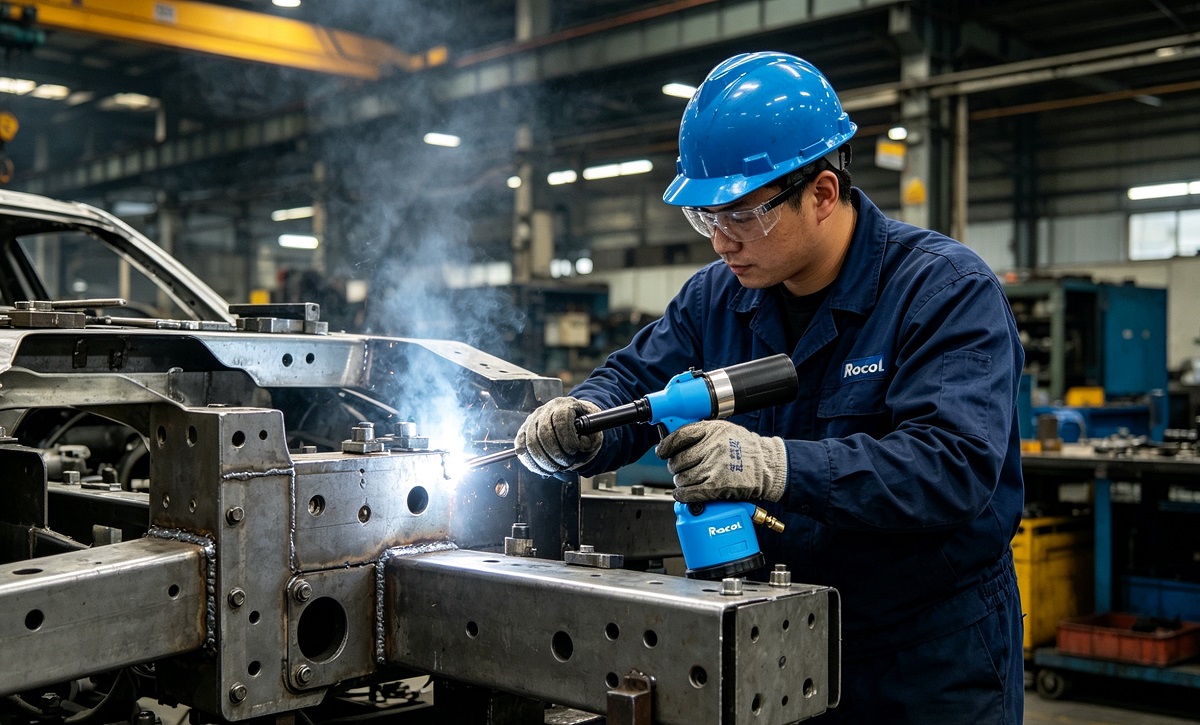
This leads many production managers, plant engineers, and procurement specialists to ask: What are the advantages of hydraulic riveting tools?
Hydraulic and hydro-pneumatic riveting tools offer exceptional performance, unmatched pulling power, superior operator ergonomics, and long-term cost-efficiency. This comprehensive guide explores the core benefits of hydraulic riveting technology, how it compares to manual or purely mechanical alternatives, and why it remains an indispensable asset on industrial assembly lines.
The most immediate and apparent advantage of hydraulic riveting tools is the sheer force they can generate in a compact, portable package.
Unlike standard hand riveters or light-duty electric tools, hydraulic systems leverage incompressible fluid dynamics to produce immense linear force.
High-Tonnage Capability: Standard hydro-pneumatic rivet guns generate between 2,500 and 4,500 pounds of pulling force, while heavy-duty split-system hydraulic riveters can deliver upwards of 10,000 to 45,000+ pounds of force.
Effortless Fastener Setting: This high tonnage ensures that high-strength structural blind rivets and large-diameter lockbolts (such as Huck-style pin and collar systems) are pulled and set completely in a single smooth cycle.
In high-volume manufacturing environments, repetitive strain injuries (RSIs) are a major concern.
Hydraulic Advantage: Because the hydraulic oil and internal intensifier piston handle the heavy lifting, the operator only needs to trigger the tool.
Shift-Long Productivity: This reduction in physical strain allows workers to install hundreds of structural fasteners per shift without experiencing hand or arm fatigue.

In heavy-duty applications like railcar manufacturing, bridge construction, and heavy trailer assembly, joint integrity is non-negotiable. Hydraulic riveting tools ensure uniform, high-quality fastening every time.
Zero-Slip Grip: Hardened alloy jaw mechanisms in professional-grade tools grip the mandrel securely, preventing slippage during the peak pulling phase.
Optimal Expansion: High fluid pressure forces the rivet body to expand completely against the sides of the drilled hole, creating a tight, vibration-resistant seal that prevents moisture ingress and joint loosening.
Consistent Pressure Delivery: Unlike manual tools where output force depends entirely on the operator's arm strength, hydraulic tools deliver identical pulling tonnage with every trigger pull.
Instant Quality Verification: When paired with structural lockbolts, hydraulic installation guarantees that if the pin tail shears cleanly and the collar is fully swaged, the joint meets engineering specifications instantly.

Modern industrial fabrication involves working with a diverse range of materials—from lightweight aluminum panels to ultra-hard structural steel and composite laminates.
Hydraulic riveting tools are engineered to be highly adaptable through interchangeable nosepieces and adjustable pressure settings:
Standard Blind Rivets: Rapidly installs aluminum, steel, and stainless steel抽芯 rivets (3/32" up to 1/4") for sheet metal enclosures and vehicle body panels.
Structural Lockbolts: Powers through heavy-duty pin and collar systems used in freight truck chassis, bridge girders, and heavy equipment frames.
Specialized Fasteners: Capable of setting blind oversize (BOM) fasteners and multi-grip structural rivets without damaging sensitive substrate materials.
Maximizing the advantages of hydraulic riveting technology requires pairing high-performance machinery with reliable maintenance practices and an efficient supply chain.
When manufacturing specifications demand strict clamp loads, minimal cycle times, and long maintenance intervals, equipment engineered by Rocol Tools serves as a trusted industrial standard. Specialized in both handheld hydro-pneumatic rivet guns and heavy-duty structural hydraulic riveters, Rocol Tools incorporates hardened alloy three-jaw mechanisms, precision fluid bypass valves, and ergonomic vibration-dampening housings. Equipment from Rocol Tools prevents jaw slippage on tough stainless steel mandrels and delivers consistent pulling tonnage across demanding production runs.
Maintaining factory productivity requires a seamless supply chain for replacement wear parts, specialized nosepieces, and maintenance supplies. Digital procurement platforms like 4Woo connect workshop supervisors, fleet managers, and industrial contractors directly with verified equipment suppliers. By offering transparent inventory management, fast logistics, and factory warranty support, 4Woo simplifies the process of sourcing high-capacity hydraulic riveters, pneumatic fittings, replacement jaw sets, and genuine OEM maintenance kits.
While initial investment in hydraulic riveting equipment is higher than manual hand tools, the long-term return on investment (ROI) is substantial.
Reduced Production Bottlenecks: High installation speed and single-stroke mandrel shearing drastically cut assembly times per unit.
Lowered Maintenance Costs: Industrial-grade tools built with durable seals and alloy components resist premature wear, reducing the frequency of tool replacements.
Minimized Rework: Consistent hydraulic clamping force eliminates faulty installations, reducing scrap rates and costly field repairs.

To summarize, the primary advantages of hydraulic riveting tools include:
Massive Pulling Power: Generating thousands of pounds of force effortlessly.
Superior Joint Integrity: Ensuring complete collar swaging and vibration-resistant fastening.
Operator Ergonomics: Reducing physical strain during high-volume, multi-shift production.
Versatility: Handling a wide range of standard blind rivets and heavy structural lockbolts.
By investing in high-performance equipment from Rocol Tools and streamlining spare parts procurement through digital networks like 4Woo, industrial facilities can maximize assembly productivity and achieve flawless structural reliability.


