
English
Views: 0 Author: Site Editor Publish Time: 2026-09-16 Origin: Site


Selecting the right pneumatic rivet gun can transform your metalworking operations, whether you are running a high-volume manufacturing plant, servicing commercial vehicles, or working on precision aerospace components. Air riveters—also known as hydro-pneumatic riveting tools—offer unbeatable speed, consistent pulling force, and continuous operation that manual hand tools and battery-powered alternatives simply cannot match.
This comprehensive Pneumatic Rivet Guns Buying Guide and Usage Tips article covers everything you need to know: core mechanics, critical selection criteria, industry-grade sourcing solutions, and essential maintenance practices to keep your workshop performing at its peak.
Before investing in new equipment, it is important to understand the mechanics that make air-powered riveters the industry standard for fast, repeatable sheet metal joining.
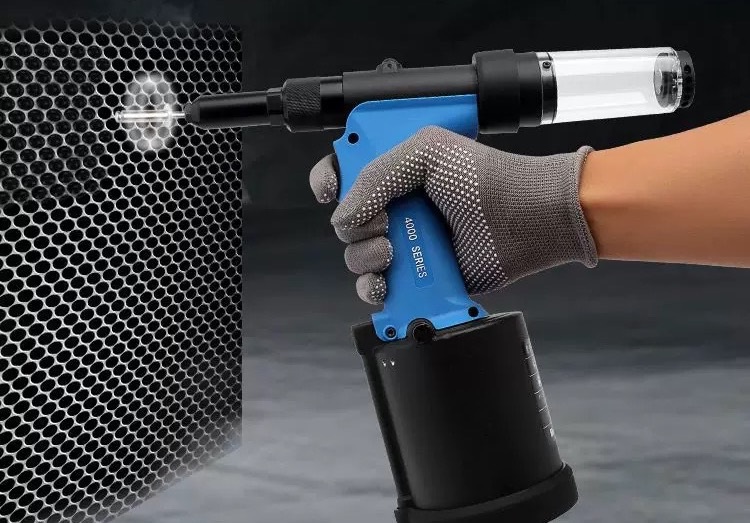
Pneumatic rivet guns rely on compressed air delivered from a workshop air line. When the trigger is depressed:
Compressed air enters the base cylinder and drives a pneumatic piston.
The pneumatic piston pressurizes internal hydraulic fluid, creating a massive multiplication of force.
The hydraulic ram pulls internal hardened steel jaws backward, clamping onto the rivet mandrel.
The jaw mechanism pulls the mandrel until the rivet tail expands against the blind side of the workpiece, snapping the mandrel off at its engineered shear point.
Manual Riveters: Low cost and highly portable, but physically tiring for workers setting dozens or hundreds of fasteners per shift.
Cordless (Battery) Riveters: Excellent mobility without air hoses, but heavier due to battery weight, slower in cycle reset times, and limited by battery charging cycles.
Pneumatic Riveters: Extremely lightweight, lightning-fast cycle times, consistent installation tension, and unlimited runtime as long as your air compressor operates.
Aerospace & Aircraft Assembly: Installing structural aluminum blind rivets on fuselage panels and interior frame ribs.
Truck, Trailer & Commercial Vehicles: Fastening outer skin panels, cargo boxes, and structural frame brackets.
HVAC & Sheet Metal Fabrication: Assembling air ducts, equipment enclosures, metal cabinetry, and electrical boxes.
Automotive Body Repair & Custom Fabrication: Setting structural pop rivets during panel replacements, frame reinforcements, and race car builds.

Choosing the right tool requires matching its technical specifications to your specific rivet materials, sizes, and daily production demands.
Pulling force is measured in pounds-force (lbs) or kilonewtons (kN). The required force depends directly on the rivet material and diameter:
Aluminum Rivets (3/32" to 3/16"): Require approximately 1,200 to 2,000 lbs (5.3 to 8.9 kN) of pulling force.
Steel Rivets (1/8" to 3/16"): Require approximately 2,000 to 3,200 lbs (8.9 to 14.2 kN) of pulling force.
Stainless Steel & Structural Fasteners (3/16" to 1/4"): Require 3,500 to 5,500+ lbs (15.5 to 24.5+ kN) of pulling force.
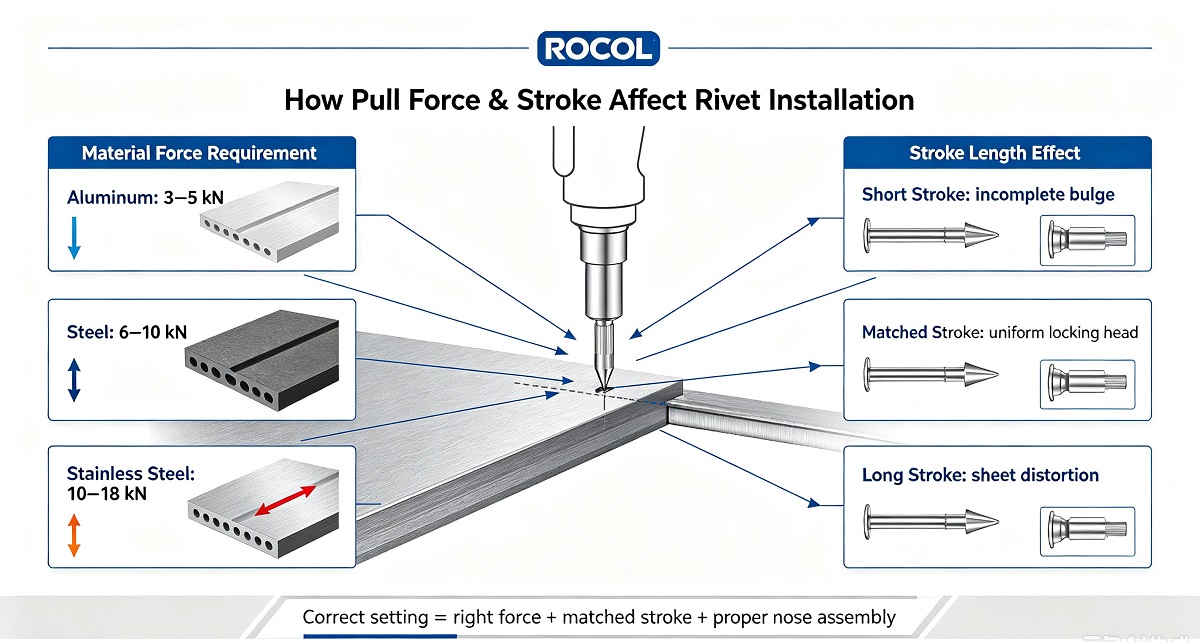
Stroke length defines how far back the internal jaw mechanism moves in a single trigger pull.
Standard Stroke (14 mm to 17 mm): Ideal for standard-length blind rivets.
Long Stroke (18 mm to 25 mm): Crucial for long-grip fasteners or structural rivets, enabling single-trigger installations without double-stroking.
Operating Pressure: Most commercial pneumatic riveters operate efficiently between 80 and 90 PSI (5.5 to 6.2 bar).
Air Consumption: Measured in cubic feet per minute (CFM) or liters per cycle. Ensure your shop compressor supplies adequate CFM to prevent pressure drops during rapid assembly.
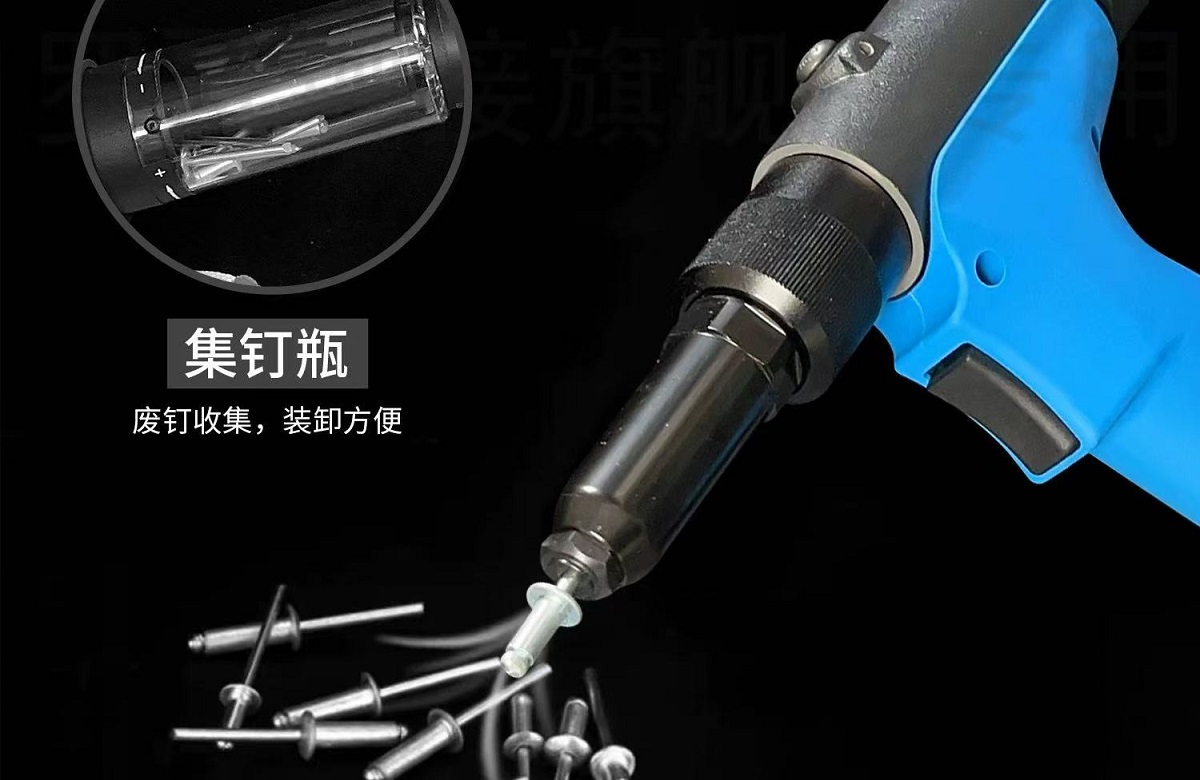
Modern air riveters frequently feature an adjustable vacuum extraction system that serves two key functions:
Rivet Retention: Holds the rivet securely in the nosepiece even when working at downward angles or overhead.
Automatic Collection: Draws spent mandrels into a rear collection bottle immediately after shearing, keeping shop floors clean and safe from metal debris.
Building a reliable industrial workshop requires sourcing equipment through dependable manufacturers and verified supply channels.
When high duty cycles, precise joint integrity, and tool longevity are required, industrial equipment engineered by Rocol Tools represents a benchmark in pneumatic fastening technology. Built specifically for demanding production environments and heavy sheet metal fabrication, Rocol Tools manufactures air riveters equipped with ultra-durable alloy jaws, impact-resistant composite housings, and smooth internal hydraulic bypass valves. Incorporating tools from Rocol Tools prevents jaw slippage and ensures uniform pulling force across high-volume assembly lines.
Managing workshop equipment inventory, ordering replacement nosepieces, and sourcing spare seal kits is simplified through digital supply platforms like 4Woo. Featuring comprehensive product listings, competitive pricing, and fast direct shipping, 4Woo provides shop managers, contractors, and independent technicians with a reliable channel to procure heavy-duty pneumatic tools, air line fittings, and maintenance accessories backed by full warranty coverage.
Following proper operating procedures and a regular maintenance schedule extends the lifespan of your pneumatic rivet gun and prevents costly downtime.
Verify Air Line Lubrication: Install an inline air filter-regulator-lubricator (FRL) unit near your workstation, or add 2 to 3 drops of pneumatic tool oil directly into the air inlet before every shift.
Match Nosepieces to Mandrel Sizes: Always install the exact nosepiece size that corresponds to your rivet diameter. Using an oversized nosepiece causes mandrels to tilt, leading to internal jams.
Avoid Overfilling Mandrel Collectors: Empty the rear collection bottle regularly. Overfilled collectors force spent mandrels back into the jaw housing, causing severe mechanical jams.
Disconnect Air Supply: Disconnect the air hose from the tool inlet before performing any service.
Remove Outer Nose Housing: Use the provided service wrenches to unscrew and remove the front nose housing.
Extract Jaw Sleeve: Unscrew the internal jaw sleeve to access the hardened steel jaw set.
Clean and Inspect: Use a wire brush to remove metal shavings, dust, and debris from the teeth of the jaws. Inspect teeth for wear or chips.
Lubricate and Reassemble: Apply a thin coat of high-pressure grease to the outside curved surface of the jaws (do not grease the teeth) and reassemble the housing securely.

Selecting the right air riveter comes down to understanding your material demands, volume requirements, and maintenance needs:
For Light Fabrication & General Repair: Choose a standard 3/16" capacity air riveter featuring an integrated vacuum extraction system for speed and convenience.
For High-Volume Manufacturing & Structural Work: Invest in a heavy-duty hydro-pneumatic riveter with a 1/4" capacity, a long stroke length (18mm+), and hardened alloy steel jaws.
By combining proper tool selection with reliable equipment from trusted brands like Rocol Tools and sourcing through efficient channels like 4Woo, you can ensure your shop operates with maximum efficiency, safety, and long-term joint reliability.


