
English
Views: 0 Author: Site Editor Publish Time: 2026-06-30 Origin: Site


Fastening materials securely is a cornerstone of manufacturing, automotive repair, HVAC installation, and high-end DIY projects. For decades, professionals and hobbyists alike relied on the raw muscle power of manual hand riveters or the loud, tethered setup of pneumatic air rivet guns. However, the rise of advanced battery technology and brushless motors has brought a third contender to the forefront: the electric rivet gun.

But a crucial question remains for many workshop owners and trade professionals: Are electric rivet guns actually any good? Do they pack enough punch to replace proven pneumatic systems, or are they just an overpriced trend?
In this comprehensive guide, we will break down the mechanics, advantages, limitations, and real-world applications of electric rivet guns to help you decide if they are worth your hard-earned money.
Before evaluating their worth, it is essential to understand what makes these tools tick. An electric rivet gun—often referred to as a cordless or battery-powered rivet tool—uses an electric motor to actuate the internal mechanism that pulls the mandrel of a blind rivet until it snaps, setting the rivet in place.
Unlike manual tools that rely on leverage from your hands, or pneumatic tools that use compressed air, an electric rivet gun utilizes a motor (frequently a high-efficiency brushless motor) coupled with a mechanical gearbox. When you pull the trigger, the motor drives a set of jaws backward, gripping the rivet mandrel and pulling it with thousands of pounds of force. Once the joint is secure and the mandrel breaks off, the mechanism automatically reverses or resets, ready for the next rivet.
While corded electric rivet guns exist, they are increasingly rare in modern environments. The industry has overwhelmingly shifted toward cordless, battery-powered models. These tools run on standard lithium-ion battery platforms (typically 12V, 18V, or 20V), offering the exact same portability as modern cordless drills or impact drivers.
To answer the core question bluntly: Yes, electric rivet guns are exceptional tools that have revolutionized modern fastening. However, their value depends heavily on your specific workflow.
To give you a balanced overview, let's explore the distinct advantages and potential drawbacks of integrating these tools into your arsenal.
The single greatest benefit of a cordless electric rivet gun is the complete absence of hoses and cords. If you are working on a roof installing HVAC ductwork, crawling inside a vehicle chassis, or moving across a massive factory floor, you aren't dragged down by a heavy air hose. You don't need to stay within 50 feet of a noisy air compressor.
Manual riveting requires significant physical exertion, and as fatigue sets in, the quality of the installation can suffer. Electric rivet guns deliver the exact same pulling force on the first rivet of the day as they do on the five-hundredth. Advanced options, such as those engineered by Rocol Tools, feature precise electronic pulling control, ensuring that every blind rivet is set with perfect uniformity without damaging the surrounding substrate.

Repetitive strain injuries (RSI) are a serious concern in industrial environments. Squeezing a manual rivet gun hundreds of times a day can lead to severe wrist and forearm fatigue. Electric alternatives require nothing more than a light trigger pull, dramatically lowering physical strain and keeping worker productivity high throughout long shifts.
Quality electric rivet guns are a significant investment compared to manual hand tools or basic pneumatic guns. The cost of the brushless motor, specialized internal gearing, and lithium-ion batteries adds up.
Because they house both a motor and a battery pack at the base, electric rivet guns are naturally heavier than lightweight pneumatic guns. While they eliminate the "drag" weight of an air hose, holding a top-heavy tool for eight straight hours overhead can still cause shoulder fatigue if the tool isn't ergonomically balanced.
To truly understand if an electric rivet gun is right for you, it helps to compare it directly against the traditional alternatives.
| Feature | Manual Rivet Guns | Pneumatic (Air) Rivet Guns | Electric (Cordless) Rivet Guns |
| Power Source | Human Muscle | Compressed Air | Lithium-ion Battery |
| Portability | High (No cords) | Low (Tethered to Compressor) | High (No cords) |
| Speed | Slow | Extremely Fast | Fast to Medium-Fast |
| Initial Cost | Very Low | Moderate | High |
| Maintenance | Extremely Low | Moderate (Oiling, seals) | Low (Brushless motors) |
| Best For | Occasional DIY | Stationary Assembly Lines | Field Work & Mobile Repair |
If you only need to pop five or ten rivets a month to fix a loose lawn chair or a gutter, a manual hand tool is perfectly fine. However, if your project involves dozens of rivets—especially tougher materials like stainless steel—a manual tool will quickly wear you out. Electric options turn a painful, two-handed chore into a seamless, one-handed, one-second task.
This is where the debate gets fierce. In a fixed factory setting where a worker stands at a dedicated workstation all day, pneumatic rivet guns are still king. They are incredibly fast, lightweight, and can run indefinitely because they draw power from a central air compressor line.
However, if you need to step outside the factory floor, go out into the field, or move between different service bays, the electric gun wins hands down. You avoid the massive energy costs of running a large air compressor and eliminate the trip hazards of air lines.
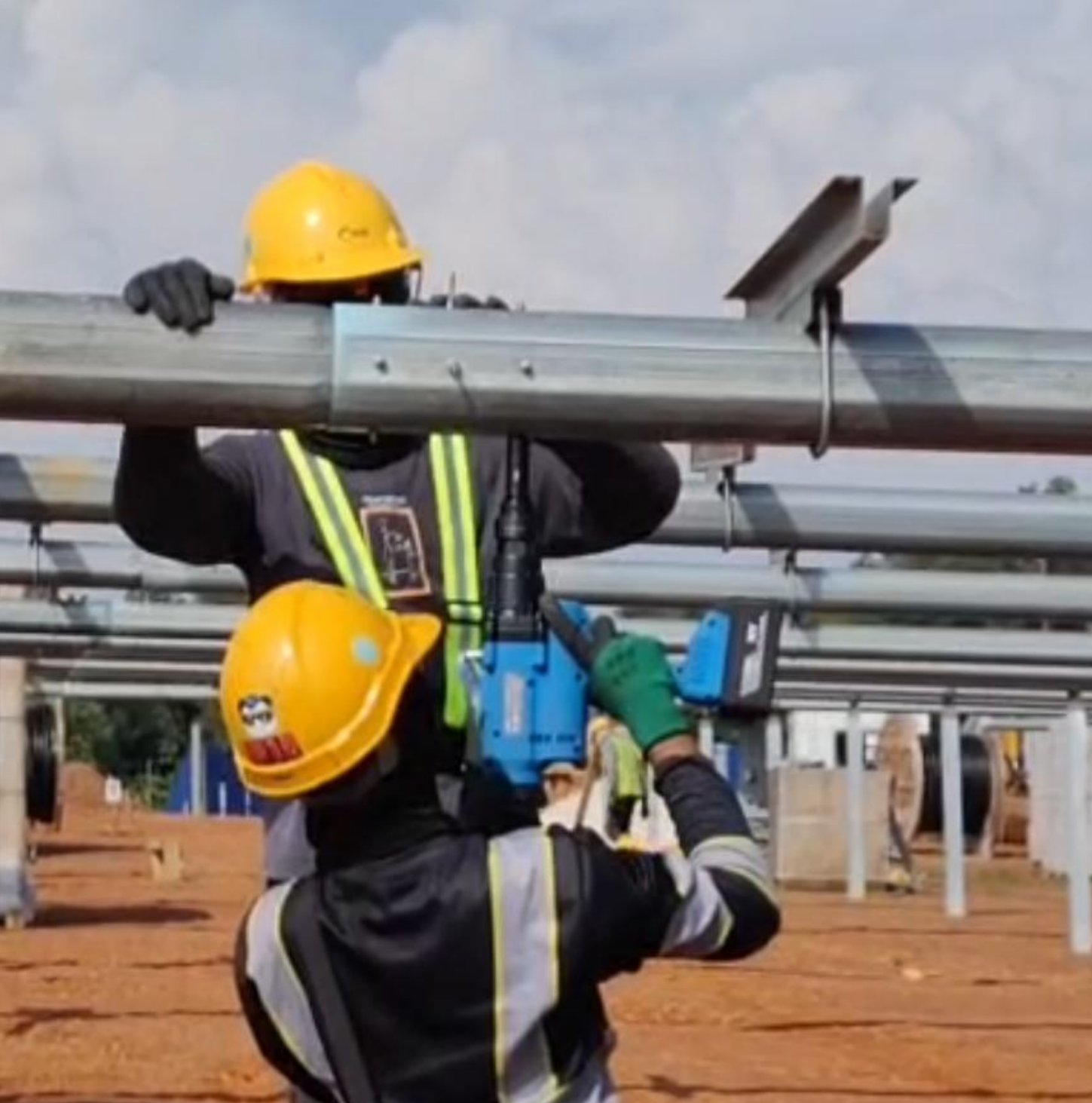
Electric rivet guns aren't just a luxury item; they are critical problem-solvers across various industrial and commercial sectors.
Modern vehicles utilize a mix of aluminum, high-strength steel, and composite materials that cannot always be welded. From securing body panels and fender flares to installing interior components, mobile mechanics and auto body technicians rely heavily on cordless riveting tools to replicate factory-spec finishes right on the shop floor.
HVAC technicians spend a vast majority of their time working in tight spaces, basements, crawls spaces, and commercial rooftops. Dragging a pneumatic hose up a commercial extension ladder is not only exhausting but highly dangerous. A cordless rivet gun clips right onto a tool belt, making overhead ductwork installation safer and infinitely more efficient.
For high-end DIYers building custom overland trailers, aluminum boats, or architectural metal accent pieces, an electric rivet gun bridges the gap between amateur builds and professional-grade craftsmanship.
If you have decided to take the plunge and upgrade your tool kit, you shouldn't just grab the cheapest option on the shelf. Riveting requires incredible mechanical force, and build quality matters.
Not all rivets are created equal. Aluminum rivets are soft and easy to pull, whereas stainless steel and structural steel rivets require massive pulling force. Check the Newton (N) rating or pounds-of-force (lbs) specification of the tool. A tool built for heavy-duty industrial work should ideally offer a pulling force upwards of 10,000 N to 20,000 N.
Look for tools that run on efficient, smart battery management platforms. A single 2.0Ah or 4.0Ah battery should ideally be able to set anywhere from 500 to 1,500 rivets on a single charge, depending on the rivet diameter and material hardness.
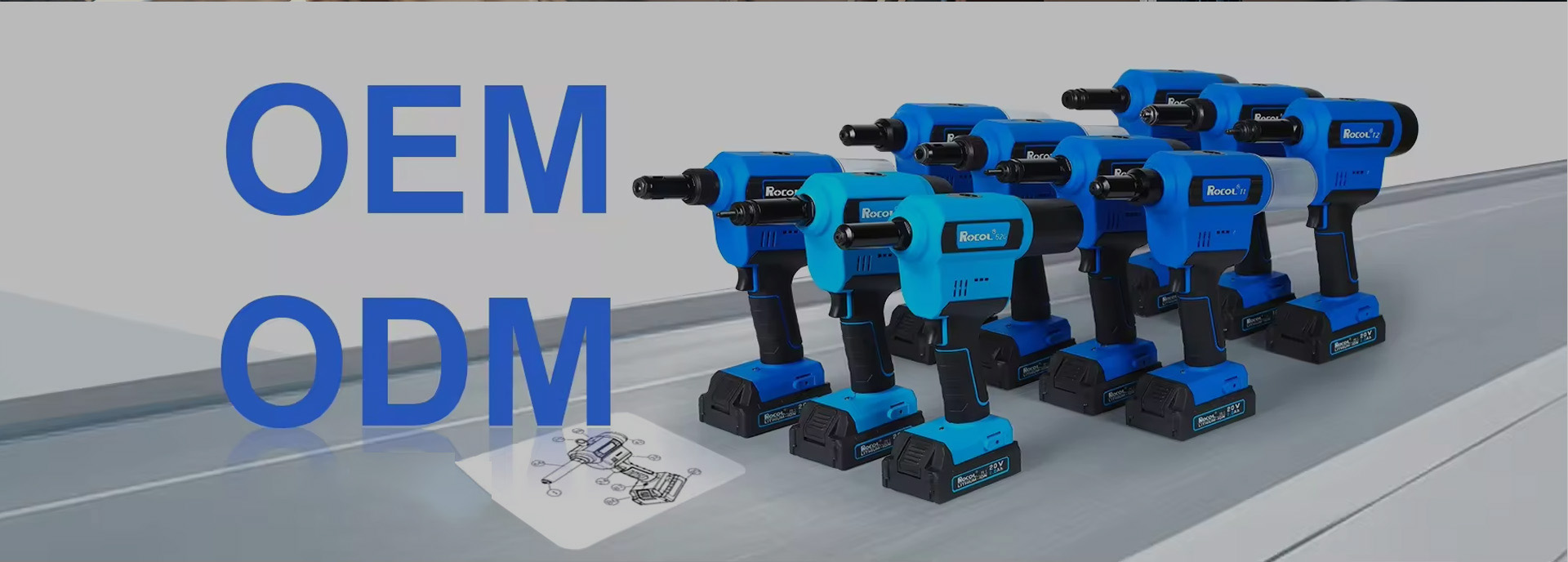
When navigating the commercial tool market, finding trusted hardware that balances heavy industrial capability with accessible pricing is key. Brands like Rocol Tools have established a formidable reputation in the professional fastening space. Known for their rugged engineering, long stroke lengths, and robust brushless motor configurations, their tools ensure that heavy-duty metal fabrication shops run without unexpected downtime.
If you are looking to source high-tier fabrication equipment, compare verified tool specifications, or find the best wholesale distribution channels, global sourcing platforms like 4Woo offer an optimized gateway. By leveraging digital supply networks like 4Woo, procurement managers and independent contractors alike can evaluate real-world consumer feedback, cross-reference tool compatibility, and secure authentic hardware with transparent supply chains.
Ultimately, whether an electric rivet gun is "good" comes down to how much value you place on your time, mobility, and physical health.
Buy an electric rivet gun if: You frequently work on-site, need to move around your workshop freely, install more than 50 rivets per week, or want to reduce physical strain on your hands and wrists.
Skip it if: You only do occasional, light-duty DIY crafts once a year, or you operate a highly centralized, stationary assembly line where pneumatic infrastructure is already fully optimized.
With top-tier manufacturers like Rocol Tools continuously pushing the boundaries of what cordless motors can achieve, and B2B platforms like 4Woo making industrial sourcing easier than ever, there has never been a better time to sever the cord, ditch the air hose, and upgrade to the power of electric riveting.


