
English
Views: 0 Author: Rocol Factory Publish Time: 2026-06-26 Origin: Site


In modern industrial assembly, high-volume structural fastening requires balancing initial capital expenditure (CapEx) with long-term operational efficiency (OpEx). For procurement managers, manufacturing engineers, and global industrial distributors, transitioning away from legacy pneumatic equipment toward advanced, data-driven assembly cells is a top priority entering 2026.
Sourcing heavy-duty equipment directly from an original equipment manufacturer (OEM) provides strategic advantages, including cost efficiency, direct engineering support, and reliable component supply chains. This comprehensive technical guide analyzes the mechanics, infrastructure economics, and Industry 4.0 data frameworks of commercial-grade smart cordless riveting tools. We also explore how global manufacturing facilities leverage factory-direct access to industry-leading platforms, such as those engineered by Rocol Tools and their flagship 4Woo smart cordless series, to deploy scalable, future-proof assembly workflows.

Procuring professional-grade assembly equipment requires evaluating supplier reliability, customization capabilities, and lifecycle support. Partnering directly with a dedicated manufacturing facility fundamentally alters the B2B purchasing experience.
Traditional industrial distribution networks often involve multi-tiered supply chains, where brokers, regional importers, and local trading entities add markups to the final unit price. Opting for factory-direct sales channels allows procurement teams to secure tier-1 wholesale pricing, optimizing the total cost of ownership (TCO) for large-scale equipment upgrades. This structural cost reduction enables enterprises to allocate capital toward advanced smart features rather than administrative overhead.
High-volume structural lines frequently present unique engineering constraints, such as restricted space access or specialized high-tensile material profiles. Factory-direct sourcing opens clear channels to the OEM’s internal research and development teams. Whether an assembly bay requires customized anvil lengths, specialized nosepiece geometries for thin-gauge aluminum sheets, or specialized software integration for existing enterprise resource planning (ERP) systems, direct manufacturer communication guarantees that the delivered hardware meets precise plant-floor specifications.
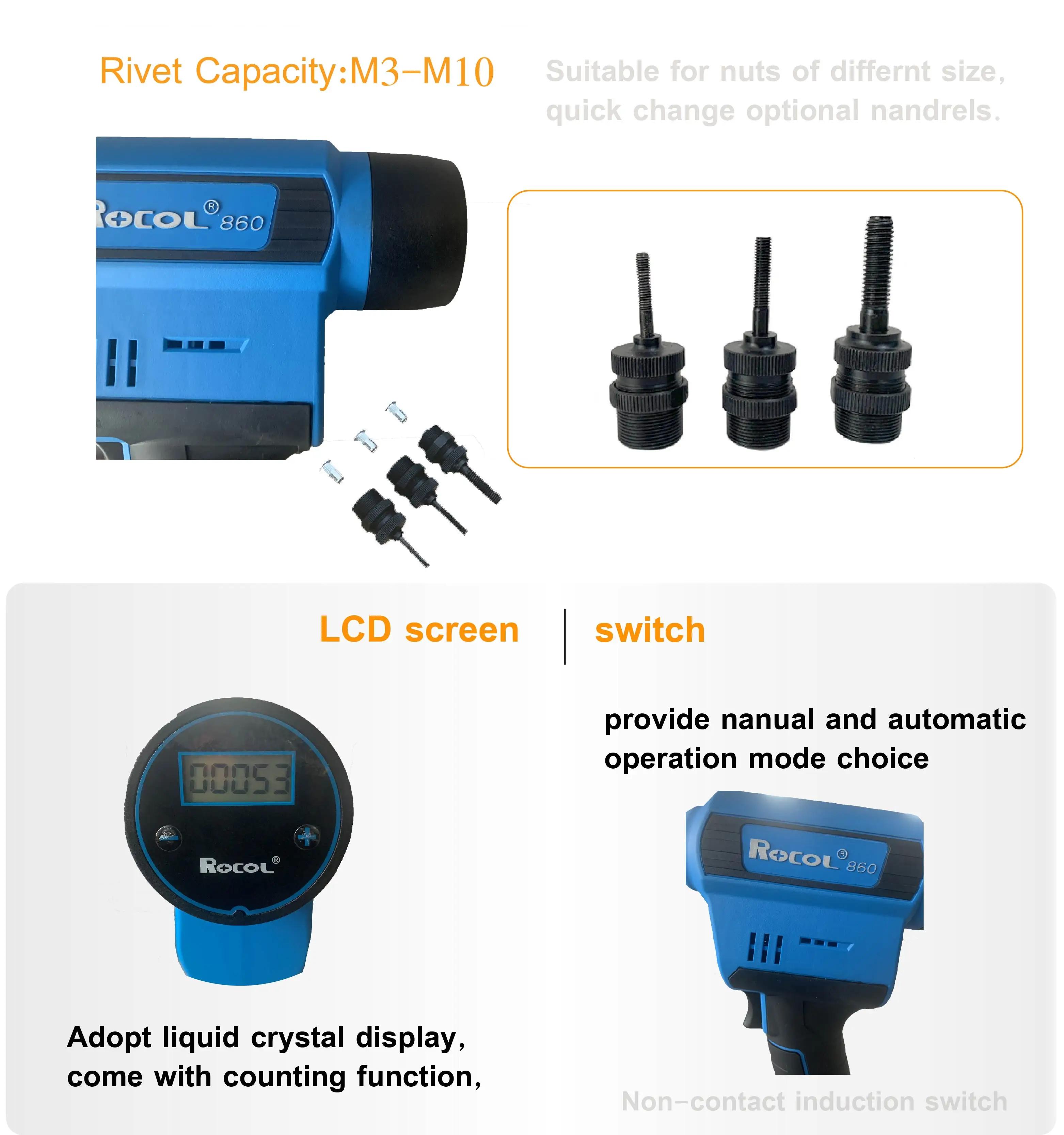
To ensure consistent runtime across intensive, multi-shift production schedules, factory buyers must evaluate the internal mechanical and electronic systems designed for repeatable material deformation.
The core of an industrial cordless riveting cell is the heavy-duty Brushless DC (BLDC) motor. Legacy brushed variants rely on continuous physical friction between carbon brushes and a rotating commutator. This dynamic interaction causes rapid component wear during continuous factory rotations, generating excessive frictional heat and releasing microscopic, conductive carbon dust particles into the immediate workspace.
This particulate discharge poses contamination hazards within cleanroom electronics assembly lines, medical device production cells, and automated tier-1 automotive pre-treatment paint lines. Advanced BLDC drivetrains utilize computerized electronic commutation through high-grade permanent magnet rotors and precision stator coils. This design completely removes internal physical contact friction, thereby optimizing power transfer metrics, extending maintenance intervals, and increasing electrical efficiency thresholds over consumer-grade baselines.
Converting the high-speed rotational energy generated by a BLDC motor into the immense linear pulling force needed to snap thick-walled structural blind mandrels requires precise mechanical translation. Industrial tool manufacturers deploy integrated multi-stage planetary gearboxes directly coupled with a high-efficiency industrial ball screw assembly. This purely mechanical configuration translates rotational torque into highly linear, smooth axial displacement along the centerline of the fastener.
When deploying large battery-powered assembly fleets across industrial production cells, cell chemistry resilience and active electronic voltage regulation determine the facility's real return on investment.
Standard retail battery-powered tools often exhibit a distinct structural defect: as the internal lithium battery packs drop below 40% charge capacity, the terminal output voltage decreases linearly. For assembly operators, this voltage drop causes a corresponding loss in maximum pulling force, resulting in under-set joints, incomplete mandrels, and loose structural seals toward the end of a shift.
Industrial-grade solutions integrate active microprocessors within the battery management system (BMS) that continuously sample output voltage thresholds. This circuitry modulates power pathways to ensure identical high-tonnage pulling force is delivered consistently, regardless of whether the battery pack is at 100% capacity or 5% capacity remaining.
Continuous heavy-duty blind riveting generates rapid thermal energy accumulation within the tool's power source due to high current draws. High-performance batteries feature specialized multi-cell configurations built with low internal resistance cells and integrated copper busbar pathways. These packs are designed for optimal thermal resilience, enabling rapid continuous duty cycles without triggering thermal shutdown metrics or causing early cell lifecycle degradation.
Manufacturing facility managers and industrial supply planners must constantly contrast upfront procurement expenditures (CapEx) against long-term daily operating and maintenance overhead (OpEx). Transitioning to a cordless battery fleet changes the operational cost blueprint of a manufacturing site.
| Operational Procurement Parameters | Bulk Hydro-Pneumatic Tooling Fleets | Factory-Direct Rocol Tools 4Woo Systems |
| Primary Plant Utility Dependency | Central air compressors, refrigerant dryers, hard-piped loop lines | Standard electrical grid sockets for centralized or local charging stations |
| Energy Consumption Profile | Low efficiency; continuous power draw to offset line pressure leaks | High efficiency; electrical draw occurs only during active charging cycles |
| Factory Floor Spatial Agility | Restricted by physical air-hose reach; creates line trip hazards | Completely untethered; multi-axis spatial mobility across remote areas |
| Quality Control and Asset Logging | Analog architecture; relies on manual post-cycle visual inspection | Real-time digital process validation using integrated load sensors |
| Routine Fleet Maintenance Protocols | Daily lubrication, moisture bleeding, frequent dynamic seal swaps | Low maintenance overhead; simple nose jaw cleaning and cell rotation |
While basic pneumatic riveting guns often have a lower initial unit acquisition price, their secondary support infrastructure is highly capital-intensive. Operating a centralized industrial air compressor network demands intense electrical energy, even when production benches are completely silent, because of systemic network pressure losses and pipe leakages. Industrial data indicates that the average manufacturing facility loses 20% to 30% of its total compressed air volume purely to hidden pipe cracks and fitting leaks.
Furthermore, air line maintenance requires regular downtime to clean inline moisture filters, top off automated oil lubricators, and repair damaged flexible drops. Transitioning a production facility to an advanced cordless battery infrastructure entirely bypasses compressed air utility demands. Reconfiguring a manufacturing line or expanding a regional assembly cell becomes as simple as moving a portable battery-charging shelf, lowering monthly facility electric bills and shrinking the factory's long-term carbon footprint.
For industrial buyers and tier-1 procurement managers searching for an optimal balance between rugged physical pulling tonnage and real-time process intelligence, the Rocol Tools 4Woo smart industrial cordless platform provides an advanced reference design available through direct factory sourcing.
The 4Woo heavy-duty rechargeable riveting system was engineered from the ground up to match or exceed the absolute mechanical performance of heavy hydraulic-pneumatic tools on high-speed commercial assembly lines. Built on a reinforced structural chassis, the 4Woo effortlessly sets structural blind rivets and heavy-duty blind rivet nuts across full metric size ranges up to 6.4mm (1/4 inch) and larger in high-tensile carbon steel, marine-grade aluminum, and structural stainless steel alloys.
The high-efficiency BLDC transmission delivers intense mechanical axial tension, ensuring absolute radial hole fill within the assembly stack. This maximizes residual clamp force values, preventing joint slippage under high dynamic vibration stresses like those encountered in commercial trailer chassis or rolling railcars.

A key advancement of the Rocol Tools 4Woo is its integrated on-board digital control computer. Instead of requiring operators to manually adjust mechanical stroke rings through continuous trial-and-error, plant engineers can program precise force limits or linear displacement distances directly into the tool via a digital interface. This precise control mechanism ensures that whether the tool is processing soft aluminum panel sheets or heavy structural framing, it provides a consistent flush set without risking material distortion or crushing damage.
Modern defense, aerospace, and automotive assembly standards state that basic post-installation visual checks are insufficient for strict quality compliance. Modern production environments require an immutable digital audit trail for every single fastening stroke executed across the assembly cell.
Intelligent platforms like the 4Woo turn a previously unmonitored mechanical action into an optimized, data-verified process. Integrated internal electronic strain gauges and high-resolution linear encoders continuously sample the tool's performance curve throughout every single installation cycle.
| Fastener Dimension Range | Programmed Pull Profile Target | Primary Process Control Methodology | Typical Industrial Application Focus |
| M3 to M5 Structural Range | Low-Force Variable Limit | High-Precision Linear Stroke Control | Delicate electronic chassis, internal control panels |
| M6 to M8 Standard Range | Medium-Force High Velocity | Balanced Dynamic Curve Monitoring | Commercial HVAC manufacturing, appliance lines |
| M10 to M12 Heavy Tonnage | Ultra-High Tonnage Peak Force | Dynamic Load & Peak Force Threshold Control | Automotive sub-frames, heavy industrial structural joints |
If an assembly technician encounters a pre-drilled panel hole that was punched out-of-tolerance, or if an internal sheet layer was accidentally left out of the material stack, the tool instantly detects that the active installation curve does not match its pre-programmed threshold window. The 4Woo immediately flashes a visual error light on its digital display panel and locks down the mechanical trigger mechanism. This internal lockout safely prevents the operator from advancing the defective component down the assembly line.
Equipped with integrated dual-band Wi-Fi and industrial Bluetooth communication modules, the Rocol Tools 4Woo streams real-time installation data directly to the facility's centralized cloud database or local MES network architecture. This automated data pipeline creates an unalterable digital record for every product assembled, ensuring seamless regulatory compliance and absolute product traceability for critical liability audits.
To preserve industrial capital equipment investments and maximize daily tool uptime metrics across high-throughput operations, production managers should mandate strict preventative maintenance routines.
Debris Extraction Intervals: Because breaking high-tensile structural mandrels requires immense physical force, microscopic metal scales and anti-corrosion oils naturally accumulate within the tool's front nosepiece assembly. Front jaws should be removed, cleaned with a fine wire brush, and inspected for tooth flattening every 5,000 cycles to prevent tool slippage.
Component Lubrication Scheduling: Apply high-pressure industrial-grade synthetic grease directly to internal sliding friction surfaces on a weekly schedule to minimize thermal wear during multi-shift continuous production lines.
Smart Balanced Charging Execution: Ensure all industrial lithium battery packs are processed exclusively using dedicated smart balancing chargers featuring active overcharge, thermal protection, and voltage spike safeguards.
Climate-Controlled Asset Storage: Maintain spare or staging battery packs in dedicated climate-controlled storage environments. Eliminating excessive ambient heat or sub-zero exposures prevents chemical capacity fade, ensuring optimal runtime capacity over years of industrial deployment.
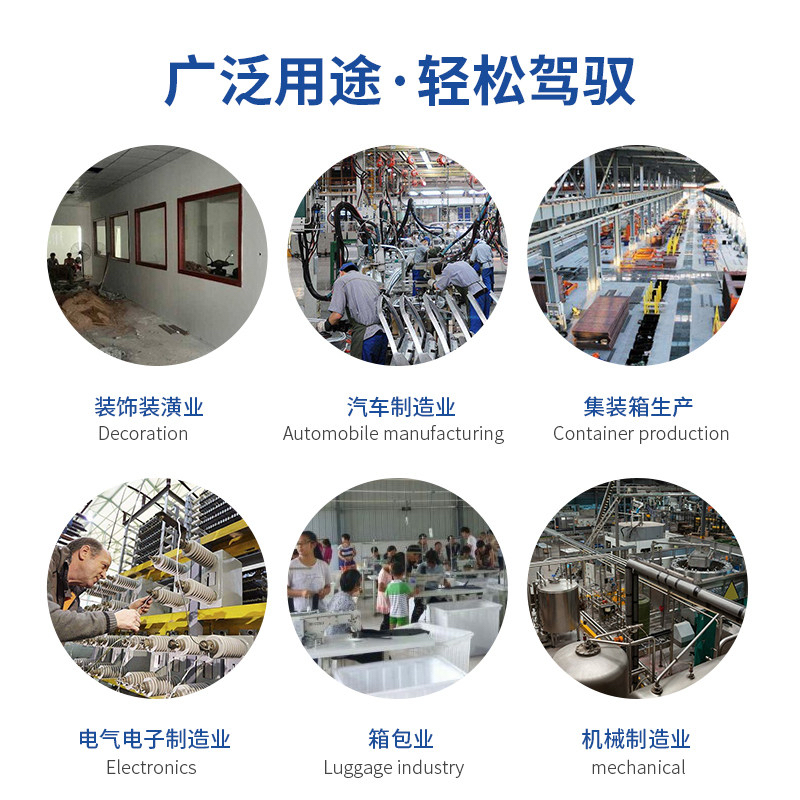
Investing in a modern commercial smart rivet tool infrastructure via factory direct sales channels is a high-impact strategic decision that directly influences a manufacturing brand's market agility, operational joint compliance, and long-term bottom-line financial metrics.
By standardizing on a premium, connected assembly ecosystem like the Rocol Tools 4Woo, manufacturing procurement groups and global industrial distributors can completely eliminate the expensive energy overhead of legacy pneumatic compressor loops, protect fragile composite metal surfaces from over-torque damage, and implement verifiable, data-driven quality control workflows for every single fastener set. Balancing rugged mechanical force with intelligent digital process validation ensures your assembly facility remains highly accurate, completely compliant, and fully future-proof.


