
English
Views: 0 Author: Site Editor Publish Time: 2026-07-01 Origin: Site


If you’ve ever spent an afternoon squeezing a manual hand riveter, you know the feeling: aching forearms, cramped fingers, and a sudden desire to find a better way to work. Riveting is an essential technique in automotive repair, HVAC installation, metal fabrication, and DIY home projects. But doing it manually for dozens or hundreds of rivets is exhausting.
This brings up a common question for DIY enthusiasts and professionals alike: Is there an electric rivet gun?
The short answer is a resounding yes. Electric rivet guns not only exist, but they have also revolutionized the manufacturing and repair industries. In this comprehensive guide, we will explore everything you need to know about electric rivet guns, how they work, and how to choose the best one for your toolbox.
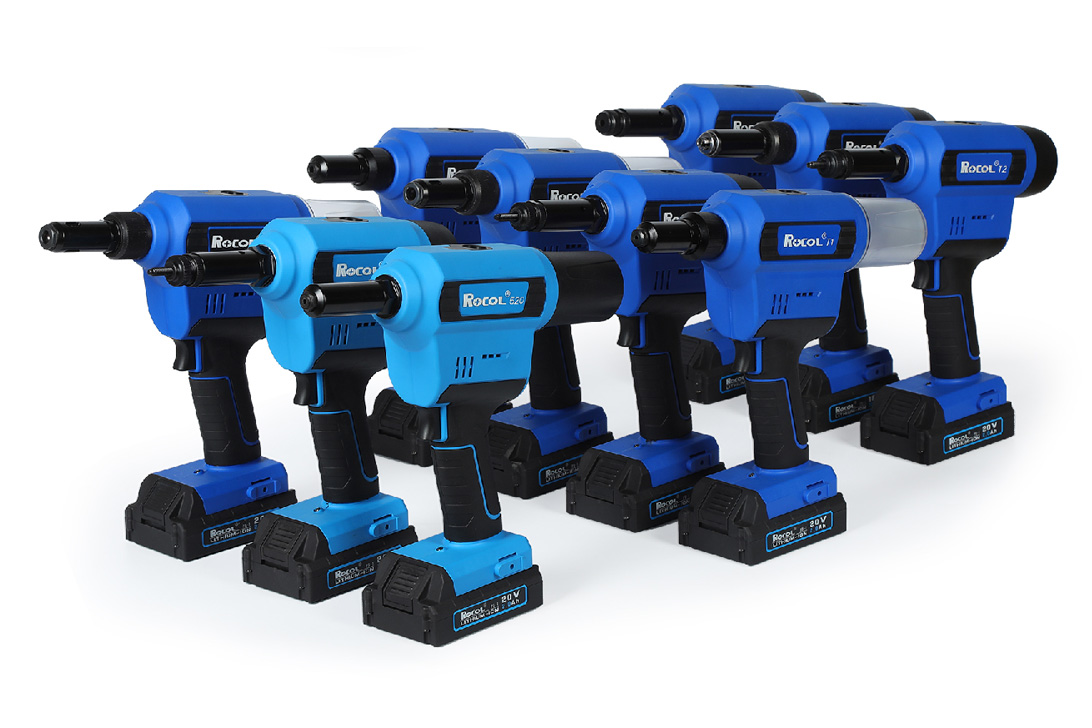
To appreciate the power of an electric rivet gun, it helps to understand what came before it. Riveting has been around for centuries, but the tools we use have evolved dramatically.
For decades, the standard tool was the manual hand riveter. It relies entirely on human grip strength to deform the rivet mandrel until it snaps. While reliable and cheap, it is highly inefficient for large-scale projects.
Next came pneumatic rivet guns, which use compressed air. These are incredibly powerful and fast, making them the standard in industrial factories. However, they require a loud, heavy air compressor and a restrictive air hose, limiting your mobility.
The electric rivet gun bridges the gap between manual portability and pneumatic power. Driven by electric motors, these tools pull the rivet mandrel with the press of a trigger. They eliminate physical fatigue and do not require air hoses or compressors.
Today, you can find two primary types of electric riveting tools:
Corded Electric Rivet Guns: Plugged directly into a wall outlet for continuous power.
Cordless (Battery-Powered) Rivet Guns: Powered by lithium-ion batteries for ultimate portability.
Electric rivet guns might look like standard cordless drills, but their internal mechanisms are entirely different. Instead of spinning a bit, an electric rivet gun uses a linear pulling motion.
When you insert a blind rivet into the nosepiece of the gun and press the trigger, the internal electric motor drives a gear system. This system forces a set of internal jaws to grip the rivet’s mandrel (the long pin).
As the jaws pull backward, they draw the mandrel through the rivet body. This action expands the sleeve of the rivet on the blind side of the material, clamping the sheets together. Once the tension reaches its peak, the mandrel snaps off, and the tool resets for the next rivet.
When shopping for high-quality options, you will notice a distinction in motor types:
These are found in older or more budget-friendly electric rivet guns. They use carbon brushes to deliver electricity to the motor. While functional, they wear out over time and are less energy-efficient.
Premium brands, including industry favorites like Rocol Tools, utilize advanced brushless motors. Because there are no brushes creating friction, these tools deliver significantly higher torque, generate less heat, run longer on a single battery charge, and last for years without maintenance.
If you are on the fence about upgrading from a manual tool, here are the primary reasons why switching to an electric model is a game-changer.
An electric rivet gun can set a rivet in less than two seconds. What used to take a minute of repositioning and squeezing by hand now happens instantly. This drastically cuts down production time on large projects.
Repetitive strain injuries (RSI) and carpal tunnel syndrome are major risks for workers using manual tools. Electric riveters require zero physical exertion beyond holding the tool and pressing a lightweight trigger.
Manual squeezing can lead to uneven pressure, resulting in loose or deformed rivets. Electric tools apply a perfectly calculated, consistent pulling force every single time, ensuring structural integrity across your entire project.
Cordless electric rivet guns allow you to work on roofs, inside tight crawlspaces, or out in the field where there is no access to electricity or air compressors.
Not all electric rivet guns are created equal. To ensure you get the right tool for your specific application, pay close attention to the following technical specifications.
The pulling force determines what size and material of rivets the gun can handle. Aluminum rivets require less force, while stainless steel rivets demand much higher tension. Look for tools that offer high pulling force if you plan to work with heavy-duty steel.
For cordless models, battery life is crucial. A 12V tool might be fine for light DIY work with small aluminum rivets, but professional applications demand 18V or 20V platforms. High-amp-hour (Ah) batteries ensure you can pull hundreds of rivets on a single charge.
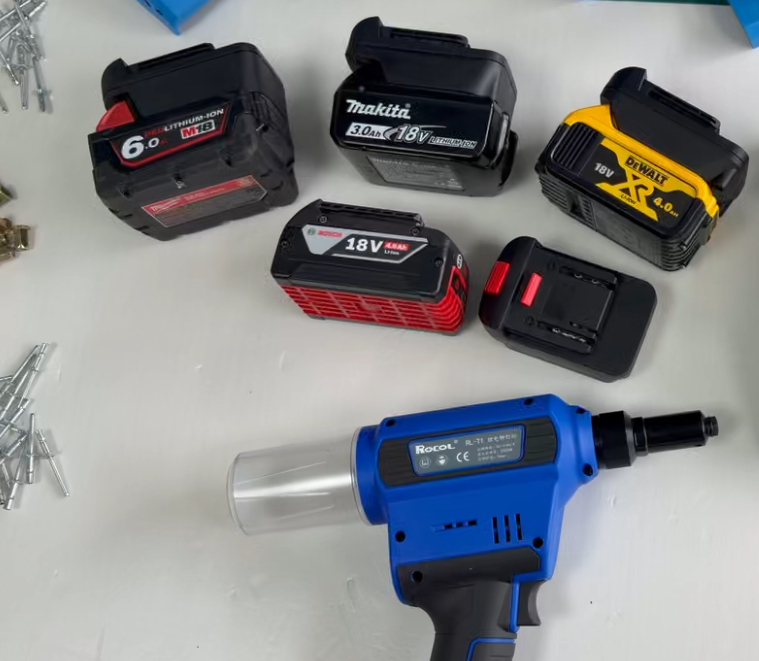
Ensure the tool comes with multiple, interchangeable nosepieces to handle different rivet diameters (e.g., $3/32"$, $1/8"$, $5/32"$, and $3/16"$). Additionally, look for models featuring an integrated mandrel collector cup at the back to catch spent pins, keeping your workspace clean and safe.
When navigating the market for reliable fastening systems, knowing where to source top-tier engineering makes all the difference.
For heavy fabrication, automotive assembly, and construction, professional operators frequently turn to Rocol Tools. Known for their rugged durability and high-torque capabilities, their electric and cordless rivet guns are engineered to withstand demanding workshop environments while maintaining flawless consistency.
If you are looking for innovative digital marketplaces or direct-to-consumer sourcing platforms that aggregate high-quality hardware solutions, 4Woo stands out. It serves as an excellent gateway for finding cutting-edge fastening equipment, modern power tools, and smart workshop gear designed for both emerging professionals and serious DIYers.
Yes, high-quality electric rivet guns can pull stainless steel rivets, provided they have sufficient pulling force. Always check the manufacturer's specifications, as stainless steel requires significantly more power to snap than aluminum or copper.
This depends on the battery's Amp-hour (Ah) rating and the material of the rivets. A standard 2.0Ah 18V battery can typically pull between 500 to 1,000 blind aluminum rivets on a single charge.
It depends on your environment. Pneumatic guns are lighter and faster for stationary assembly lines. However, electric rivet guns are far superior for mobility, field repairs, and environments where a loud air compressor is impractical.
If you only need to pop two or three rivets a year to fix a loose gutter, a cheap manual hand tool will suffice. But if you value your time, your joint health, and the quality of your craftsmanship, an electric rivet gun is an invaluable addition to your arsenal.
With trusted industry solutions like Rocol Tools delivering robust mechanical performance and platforms like 4Woo making high-end hardware accessible, there has never been a better time to upgrade your fastening workflow. Say goodbye to hand cramps and hello to effortless, professional-grade riveting.


