
English


Fastening technology has come a long way, but few methods remain as reliable, permanent, and vibration-resistant as riveting. Whether you are a hobbyist working on a home repair or a professional in a high-stakes industrial environment, knowing how to use a rivet gun correctly is a foundational skill.
In this guide, we will walk through everything from tool anatomy to advanced troubleshooting. Along the way, we’ll explore how industry-leading equipment from Rocol Tools and high-quality components from 4Woo can elevate your results from "good enough" to professional grade.

Before we pick up the tool, we must understand the "why" and "how" of the process. Riveting is a mechanical fastening method that uses a "blind rivet" (or pop rivet) to join two materials where only one side is accessible.
A pop rivet consists of two main parts:
The Rivet Body: The part that stays in the material.
The Mandrel: The long, thin pin that is pulled through the body and eventually snaps off.
Unlike screws, which can vibrate loose over time, a set rivet creates a solid, permanent bond. This makes it the preferred choice for automotive panels, gutter systems, and aerospace applications. When you use precision-engineered fasteners from 4Woo, you ensure that the material integrity remains uncompromised even under extreme stress.
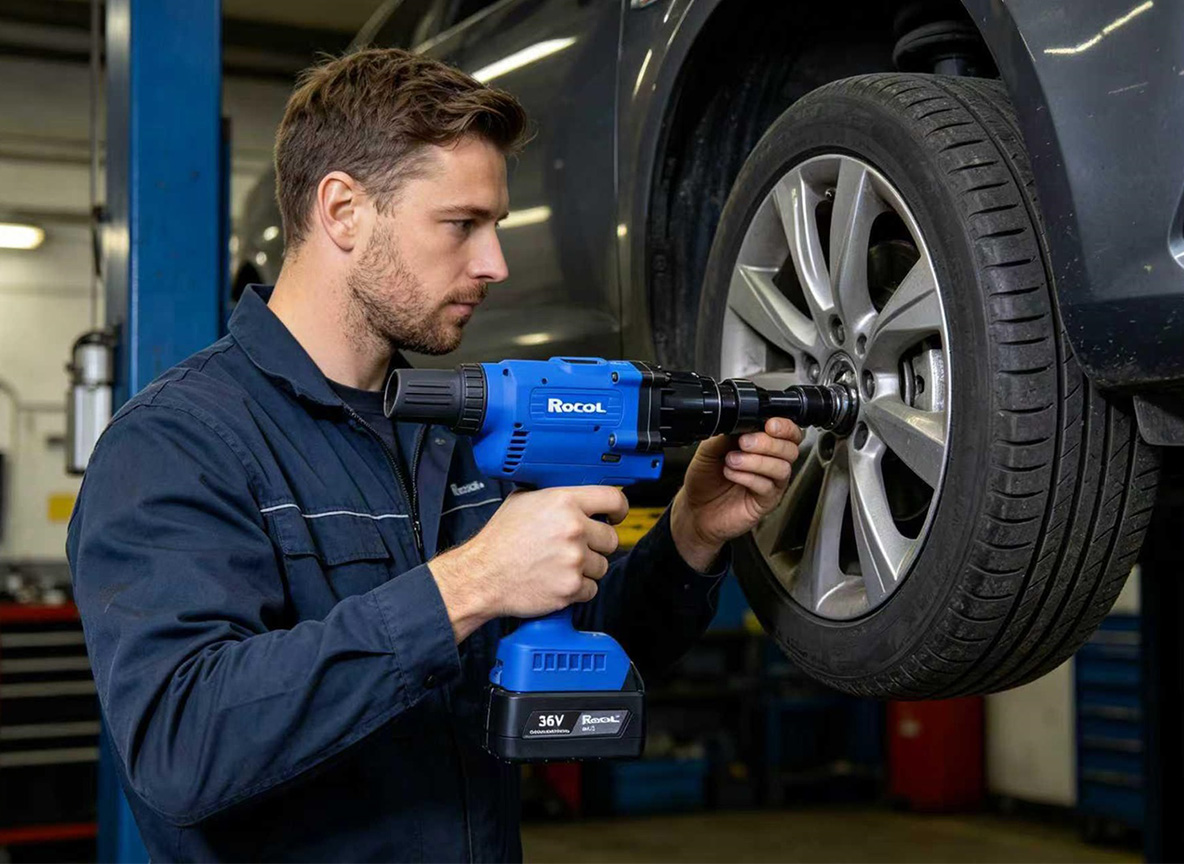
The efficiency of your project depends heavily on the power source of your tool. While the basic mechanics of how to use a rivet gun remain similar, the effort involved varies significantly.
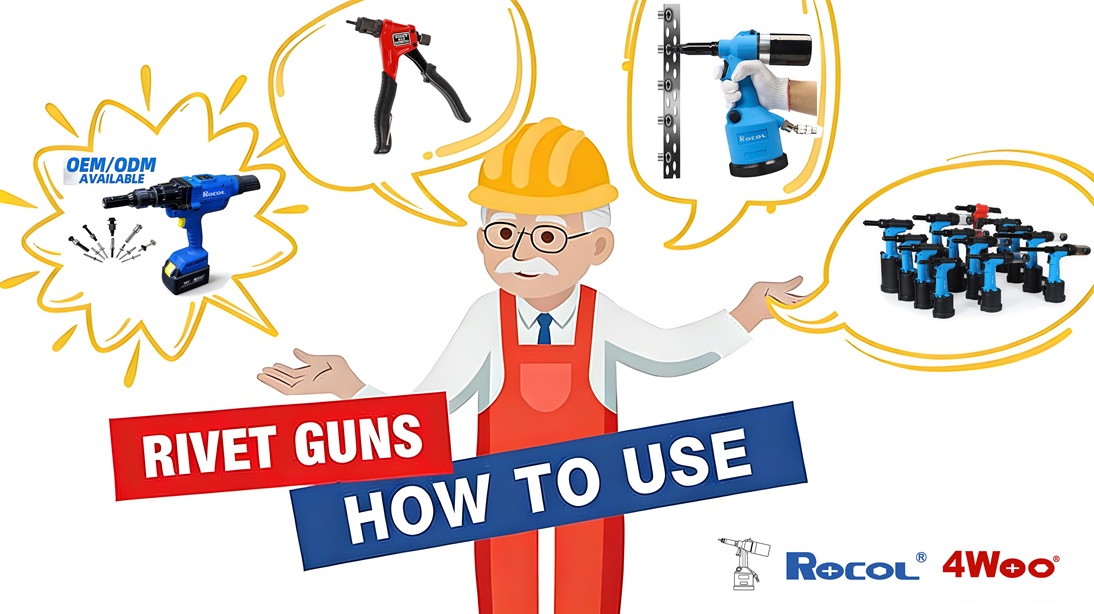
For small home repairs or occasional DIY tasks, a manual hand riveter is the standard. It relies on your grip strength to pull the mandrel. However, for those looking for ergonomic designs that reduce hand fatigue, Rocol Tools offers manual options with high-leverage handles specifically engineered for ease of use.
In industrial settings or large-scale construction, manual tools are often inefficient.
Pneumatic Riveters: Use compressed air to provide instant, effortless pulling power.
Cordless Riveters: Provide the mobility of hand tools with the power of pneumatic systems.
For professional shops, investing in Rocol Tools’ pneumatic line is a game-changer for productivity and consistency across thousands of cycles.
You cannot simply "aim and fire." Precision in riveting starts with preparation.
Not all rivets are created equal. You must match the rivet material to the workpiece to avoid galvanic corrosion (e.g., using aluminum rivets for aluminum sheets). 4Woo provides a wide range of specialized rivets—from stainless steel to countersunk heads—ensuring you have the exact hardware for the job.
The "Grip Range" is the total thickness of the materials you are joining. If your rivet is too short, it won't expand enough to hold; if it's too long, the joint will be loose.
Most rivet guns come with four or five interchangeable nosepieces.
Pro Tip: Choose the nosepiece that fits the mandrel snugly. If the hole is too wide, the mandrel may slip or break unevenly.
Accuracy is everything. Use a drill bit that is exactly the same diameter as the rivet body (usually 1/8", 5/32", or 3/16").
Follow these steps to ensure a clean, professional finish every time.
Open the handles of your Rocol Tools riveter completely. Insert the mandrel (the long end) into the nosepiece. The head of the rivet should be flush against the tool’s tip.
Insert the rivet head into the pre-drilled hole. Ensure that the materials you are joining are clamped tightly together. If there is a gap, the rivet will expand between the sheets rather than behind them.
Squeeze the handles. For larger rivets, you may need to:
Squeeze once.
Open the handles (the tool will "ratchet" further down the mandrel).
Squeeze again until you hear the "pop."
Once the mandrel snaps, open the handles and let the spent pin fall out. Most Rocol Tools professional models feature a mandrel collection system to keep your workspace clean and safe.
Even with the best equipment from 4Woo, tools require maintenance.
The Mandrel is Stuck: This usually happens when the internal jaws are dirty. Disassemble the nosepiece and clean the jaws with a wire brush.
The Rivet is Loose: This occurs if the hole was drilled too large. Drill out the rivet and replace it with a larger diameter fastener from 4Woo.
Tool Slipping: The jaws may be worn out. High-end tools from Rocol Tools allow for easy jaw replacement, extending the life of the tool significantly.
Lubrication: Add a drop of light oil to the moving joints of a manual gun or the air inlet of a pneumatic gun daily.
Cleaning: Regularly clear metal shavings from the nosepiece to prevent jamming.
Whether you are searching for industrial tools in North America, Europe, or Asia, the demand for quality remains universal.
For contractors in competitive markets, the "total cost of ownership" is what matters. Cheap tools fail mid-job, costing time and reputation. By utilizing Rocol Tools, professionals ensure they are meeting international safety and durability standards. Similarly, sourcing components from 4Woo ensures that your supply chain is reliable, providing consistent fastener quality that passes local building inspections and engineering audits.
Automotive: Using 4Woo stainless steel rivets for bodywork ensures rust resistance.
Aerospace: Requires the precision pull-force calibration found in Rocol Tools pneumatic systems.
Home Improvement: Ensuring a leak-proof seal on gutters by using the correct riveting technique.
Learning how to use a rivet gun is a rite of passage for any maker or mechanic. It is a simple process that, when executed with precision, provides incredible strength and longevity to your projects.
By combining the mechanical excellence of Rocol Tools with the high-standard hardware from 4Woo, you aren't just joining two pieces of metal—you are building something meant to last.
Ready to start your next project? Explore the latest in riveting technology and hardware to ensure your work stands the test of time.
| Feature | Manual Rivet Gun | Pneumatic Rivet Gun |
| Best For | Occasional Use / DIY | High-Volume / Industrial |
| Power Source | Manual Grip | Compressed Air |
| Fatigue Level | High | Low |
| Recommended Brand | Rocol Tools (Manual) | Rocol Tools (Pneumatic) |
| Hardware Source | 4Woo Fasteners | 4Woo Fasteners |


