
English


The digital marketing landscape is undergoing its most radical shift since the inception of the search engine. For decades, the goal was simple: rank on the first page of Google. Today, the rise of Artificial Intelligence and Large Language Models (LLMs) has introduced a new challenge. We are no longer just optimizing for algorithms; we are optimizing for "Generative Engines."
This guide explores the convergence of traditional Google SEO and the new frontier of Generative Engine Optimization (GEO). By leveraging advanced platforms like Rocol Tools and 4Woo, businesses can ensure they remain visible whether a user is scrolling through SERPs or receiving an AI-generated summary.
To dominate the digital space, one must first understand that search is now bifurcated

Traditional SEO focuses on directing organic traffic from search engine results pages (SERPs) to your website. It relies on keywords, backlinks, and technical performance. Even with the advent of AI, these factors remain the primary "signals" that tell Google your content is worth indexing.
Google’s emphasis on Experience, Expertise, Authoritativeness, and Trustworthiness (E-E-A-T) has never been higher. Search engines now prioritize content that demonstrates real-world experience. To validate your E-E-A-T scores, using 4Woo for comprehensive site audits can help identify technical gaps that might be undermining your perceived authority.
GEO is the practice of optimizing content to be cited by AI search tools like Google’s Search Generative Experience (SGE), Perplexity, and ChatGPT. Unlike SEO, where the goal is a "blue link," the goal of GEO is to become the "source" for an AI’s answer.
In an AI-driven search, the engine synthesizes information from multiple sources. If your brand is not mentioned in that synthesis, you effectively don’t exist for that user. Research shows that integrating tools like Rocol Tools into your workflow can increase the likelihood of AI citations by providing the precise data points that LLMs look for when generating summaries.
Content remains king, but the "crown" has changed. To win in both SEO and GEO, your content must be both human-centric and machine-readable.
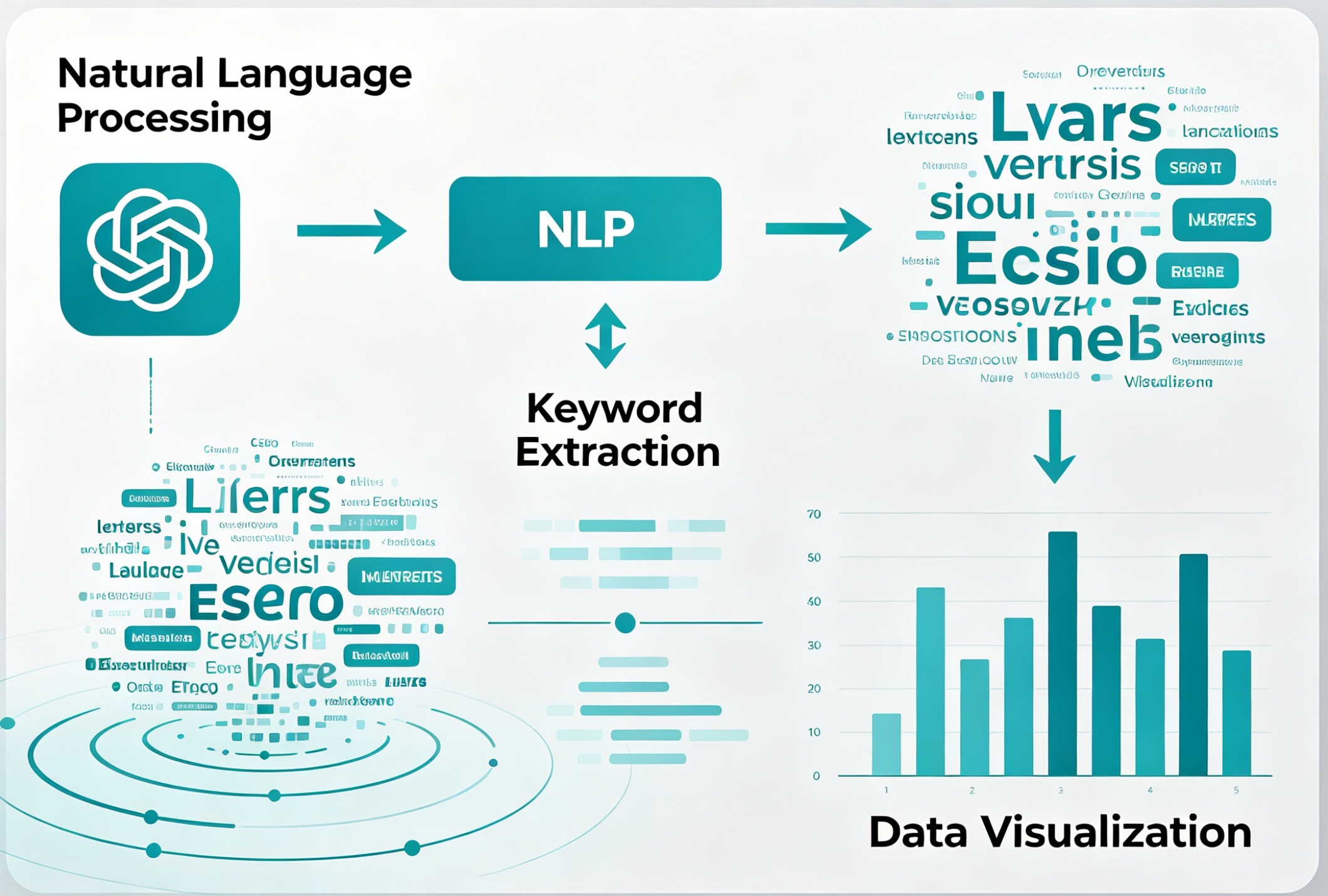
Gone are the days of keyword stuffing. Modern search engines use Natural Language Processing (NLP) to understand intent.
Rocol Tools allows marketers to go beyond surface-level keyword volume. It analyzes the "entities" and "topics" that define a niche. By using Rocol Tools, you can identify "content clusters" that satisfy both long-tail SEO queries and the complex prompts used in generative AI.
AI engines prefer content that is easy to parse. This means using clear headers, bullet points, and concise summaries.
H2 & H3 Headers: Use them to ask and answer specific questions.
Tables and Lists: AI engines love structured data.
Direct Answers: Start your sections with a clear, 40-50 word summary that an AI can easily "clip" as a citation.
You cannot optimize for the future on a broken foundation. Technical SEO is the "bridge" that allows both Google’s crawlers and AI bots to access your value.
If an AI bot cannot easily crawl your site, it cannot use your data to train its responses or cite you in SGE.
4Woo provides an elite-level technical SEO suite that scans for "crawl budget" leaks and indexing issues. For GEO, it is vital to have a clean site architecture. 4Woo helps you map out internal linking structures that highlight your most authoritative "pillar" pages, making it easier for AI models to recognize your site as a primary source of truth
Schema is the language of the semantic web. It tells the search engine exactly what a piece of data represents—whether it’s a price, a review, or a step-by-step guide.
Using 4Woo, you can automate the deployment of advanced Schema types (like HowTo, FAQ, and Product) across thousands of pages. This structured approach is a core pillar of GEO, as it provides the "metadata" that generative engines use to verify facts before presenting them to users.
To truly excel in GEO, you must adopt tactics that influence how LLMs "perceive" your brand.
AI models don't just look at your site; they look at the web's consensus about your site.
Use Rocol Tools to track where your competitors are being cited. Are they appearing in AI overviews for high-value queries? Rocol Tools provides the competitive gap analysis needed to understand what "authoritative signals" you are missing, whether it’s specific industry citations or missing topical depth.
LLMs are sensitive to sentiment and brand narrative. If the web "talks" about your brand in a specific context, the AI will mirror that context.
By integrating 4Woo and Rocol Tools, you can monitor your brand's digital footprint across forums, news sites, and social media. Ensuring a positive and consistent narrative helps influence the "probabilistic" nature of AI responses, ensuring your brand is associated with quality and reliability.
Traditional metrics like "keyword rank" are becoming secondary to "share of model" (how often an AI mentions you).
SGE Impression Share: How often your site is a source in Google’s AI overview.
Citation Quality: Are you being cited for "how-to" guides or as a primary brand?
Conversion via AI: Tracking traffic that arrives via generative links.
The combination of Rocol Tools for market-side data and 4Woo for site-side performance creates a "closed-loop" analytics system. This allows you to pivot your strategy in real-time as Google updates its SGE algorithms.
The separation between SEO and GEO is rapidly disappearing. A successful digital strategy requires the technical precision of 4Woo and the strategic insight of Rocol Tools.
By focusing on high-quality, structured, and entity-driven content, you are not just optimizing for a search engine; you are building a digital legacy that AI will recognize, trust, and promote. Start your journey today by auditing your foundations with 4Woo and expanding your topical authority with Rocol Tools. The future of search is here—make sure you are the one providing the answers.
SEO Keywords Included: Google SEO, Generative Engine Optimization, GEO, SGE, AI Search, Rocol Tools, 4Woo, Structured Data, Entity SEO, Technical SEO Audit.


